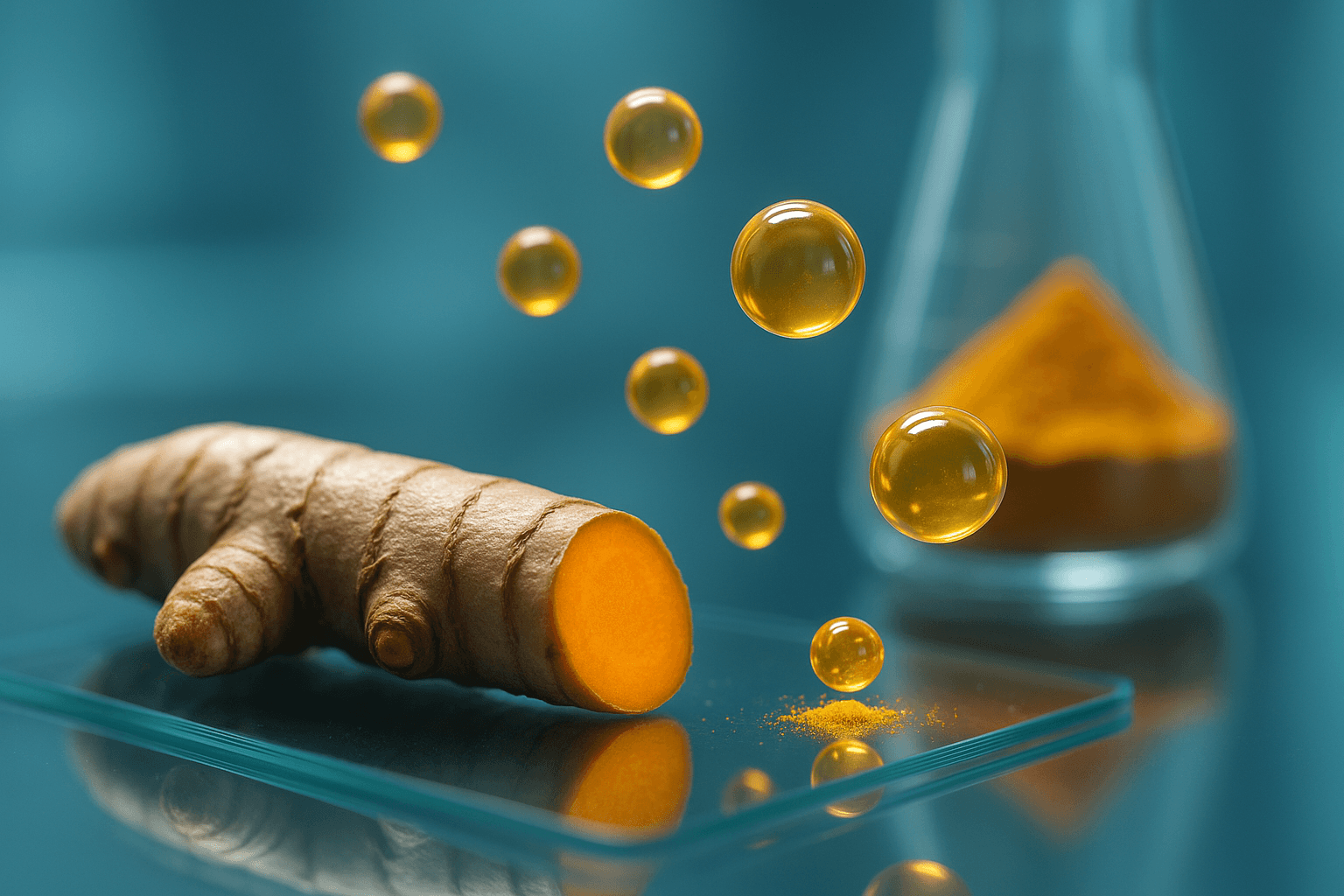
A look at what 100+ human trials actually say about turmeric, aging pathways, and whether this “golden spice” can really help you live longer.

Turmeric has become the Internet’s favorite “anti-aging spice,” showing up in lattes, supplements, and every longevity doctor’s morning routine. The hype sounds huge, but the science is more grounded: no study has shown turmeric makes people live longer, yet it does influence several aging pathways that genuinely matter.
🧡 What we know so far is encouraging. Turmeric can lower inflammation, protect cells from stress, and even support memory in some adults. This doesn’t make it a magic potion, but it does make it a smart daily habit if you care about healthy aging.
Key Takeaways
- Turmeric supports major aging pathways (inflammation, oxidative stress, brain function), but no human study has shown longer lifespan.
- Human trials show modest but real benefits for joint pain, inflammation, and metabolic health.
- Some studies find better memory and attention, but not enough evidence yet to claim dementia prevention.
- Bioavailability is the biggest challenge: your body absorbs very little curcumin unless you eat it with fat or black pepper.
- Food-level turmeric is helpful over time, but most therapeutic effects seen in studies use standardized supplements.
What Scientists Have Found About Turmeric and Aging
🧬 Aging isn’t caused by one thing. It’s a slow mix of “wear and tear,” chronic inflammation, oxidative stress, and changes in the brain.
Turmeric interacts with several of these pathways. That’s part of why longevity doctors love it. But it’s also why the science can get messy.
Here’s the simplified version.
1. Inflammation: Turmeric vs. “Inflammaging”
🔥 As we age, our bodies produce more inflammatory chemicals, even when we’re perfectly healthy. This “inflammaging” speeds up problems like arthritis, heart disease, and diabetes.
Curcumin seems to help by:
- Lowering inflammatory signals such as TNF-α and IL-6
- Turning down NF-κB, a protein that acts like an inflammation switch
- Reducing CRP (C-reactive protein) in many human trials
In real life, this often shows up as:
✨ Better joint comfort
✨ Less stiffness
✨ Easier movement
✨ Better recovery after activity
People with arthritis often report the biggest improvements, and studies confirm turmeric can work as well as some mild pain relievers for joint pain.
2. Oxidative Stress: Turmeric and the Body’s “Antioxidant Switch”
⚡ Every cell produces reactive oxygen species—tiny sparks that damage proteins, DNA, and tissues. Over years, this contributes to visible and invisible aging.
Curcumin activates a powerful internal defense system called Nrf2. When Nrf2 flips on, your cells begin making more of their own antioxidants.
This matters because your body’s own antioxidants are far more effective than anything you swallow.
Translation: turmeric doesn't just bring antioxidants, it teaches your body to create them.
3. Brain Aging: BDNF, Mood, and Memory
🧠 This is one of the areas where turmeric research gets really interesting.
Curcumin has been shown to:
- Cross the blood–brain barrier (hard for most compounds)
- Increase BDNF, a growth factor that helps brain cells stay healthy
- Reduce brain inflammation in animals
- Improve memory and attention in some small human trials
The potential is huge, but the evidence is still early. The realistic takeaway is:
Turmeric may support brain health, but we cannot say it prevents dementia.
So… Does Turmeric Actually Slow Aging?
This is the big question. And the honest answer is:
It probably supports aging-related pathways, but it hasn’t been proven to extend human life or prevent major age-related diseases.
That doesn’t make turmeric useless. It just means the anti-aging claims need real-world context.
What turmeric can do, based on human trials:
- Reduce joint pain
- Support healthier blood sugar
- Lower inflammation
- Improve some aspects of mood
- Improve some cognitive test scores (in certain studies)
These are all parts of living well as you age: your healthspan, even if we can’t say anything about actual lifespan.
Where Turmeric Shows the Strongest Real-Life Benefits
1. Joint Pain & Mobility
🌿 This is the most reliable area of benefit. Many people notice improvement within a few weeks.
For adults in their 40s, 50s, or 60s, better mobility equals more movement—and more movement is one of the most powerful longevity habits we have.
2. Blood Sugar & Metabolic Health
🍬 Curcumin may help your cells respond to insulin more effectively.
Small improvements in metabolic health help protect:
- Heart function
- Liver function
- Brain health
Metabolic diseases accelerate aging, so anything that slows them matters.
3. Mood & Cognitive Support
🌞 Some research suggests long-term curcumin use improves attention and working memory, especially in older adults.
This doesn’t replace sleep, therapy, or exercise, but it can be part of a brain-friendly routine.
The Turmeric Problem: Absorption Is Low
Here’s the issue most people don’t know:
You absorb only a tiny fraction of natural curcumin.
That means pinches of turmeric in smoothies taste great but won’t deliver much curcumin to your bloodstream.
Boost absorption by combining turmeric with:
- Black pepper (piperine increases absorption dramatically)
- Healthy fat (like olive oil, coconut milk, or ghee)
- Heat (cooking turmeric helps release more curcumin)
Supplements often use special forms like curcumin phytosomes or nano-curcumin so the body can use more of it.
Food turmeric still matters, but think of it as long-term support, not a therapeutic dose.
How to Use Turmeric for Healthy Aging (Safely)
1. Start with food
Add ½ to 1 teaspoon daily to:
- Eggs
- Soups
- Lentils
- Rice
- Curry
- Golden milk
Consistency matters more than big doses.
2. If you choose supplements, choose wisely
Look for:
- Standardized curcumin
- Black pepper extract (piperine)
- Or phytosome/nano formulas
Take with food for better absorption.
3. Check with your doctor if you have:
- Gallbladder issues
- Bleeding disorders
- Diabetes (and take medications)
- Liver disease
- Or if you take blood thinners.
This is rare but important: high-dose supplements have been linked to a few cases of liver injury.
Has Turmeric Been Debunked? Not Really—Just Overhyped.
Here’s the fair, science-aligned takeaway:
Turmeric is not:
- A longevity drug
- A cure for aging
- A guaranteed dementia shield
Turmeric is:
- A gentle, safe, natural compound
- A real support for inflammation and metabolic health
- A promising brain-support nutrient
- A useful tool for joint comfort and movement
Turmeric won’t make you immortal, but it may help you stay comfortable, mobile, and mentally sharp as you age.
Sources
- “Curcumin on Human Health: A Comprehensive Review and Meta-Analysis of 103 Randomized Trials”
https://www.researchgate.net/publication/385429624 - “A Review of the Effects of Curcumin on Inflammatory Pathways” – Frontiers in Nutrition
https://www.frontiersin.org/articles/10.3389/fnut.2022.1040259/full - “Curcumin and Cognitive Function: Systematic Review of Human Trials” – Journal of Medicinal Food
https://www.liebertpub.com/doi/10.1089/jmf.2016.3705 - “Turmeric and Curcumin Supplements: Safety and Bioavailability Assessment” – UK Committee on Toxicity
https://cot.food.gov.uk/Turmeric%20and%20Curcumin%20Supplements%20-%20Exposure%20assessment