A high-fat diet didn’t erase exercise’s benefits as tumors shrank while glucose shifted toward muscle.
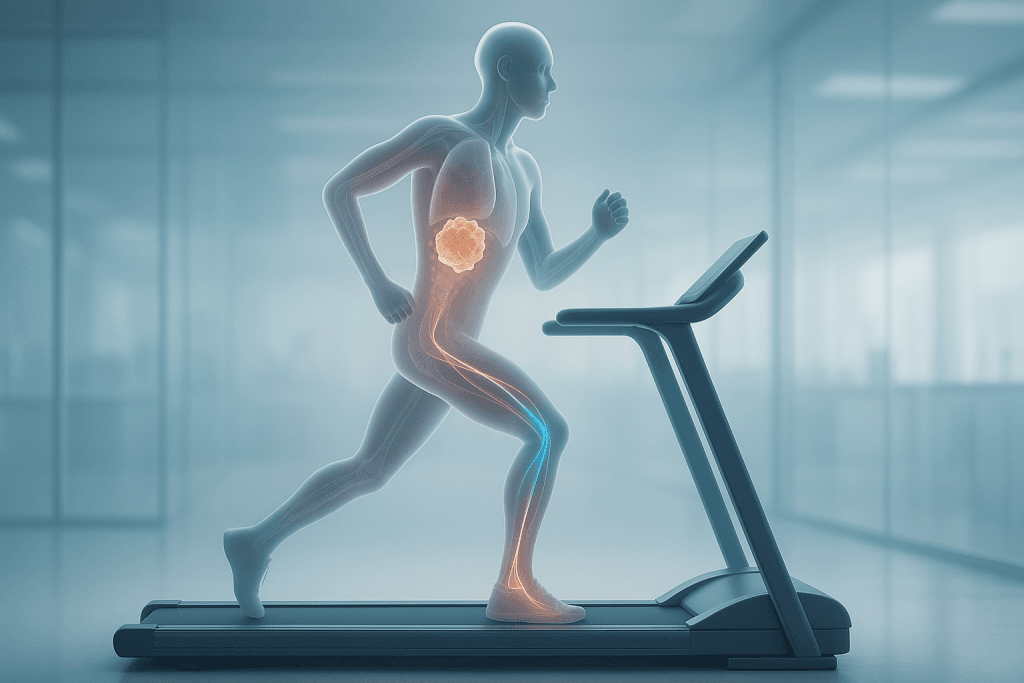
Even when mice were obese and eating a high-fat diet, four weeks of voluntary running cut tumor growth by nearly 60 percent. That surprised researchers. The new PNAS study shows that active muscle pulls in so much glucose and oxygen that tumors are left energy-starved. It suggests exercise may slow cancer by redirecting the body’s fuel, not just by boosting immunity.
Key Takeaways
- Exercise triggered fuel competition, redirecting glucose toward muscle instead of tumors.
- Obese mice still saw a ~60 percent reduction in tumor growth after four weeks of running.
- Tumors showed reduced glucose oxidation and lower mTOR signaling.
- Fitness before cancer implantation improved baseline metabolic resilience.
- Findings position exercise as a potential metabolic adjuvant to cancer therapy.
A Simple Way to Understand the “Fuel Competition”
When you exercise, your muscles act like giant glucose vacuums. They pull sugar out of the bloodstream to keep you moving. Tumors also rely on glucose, but they can’t compete with active muscle.
🏅 Who wins? Always the tissue that is working the hardest. So when muscles are active, tumors get less fuel. With less energy, tumor growth slows.
This doesn’t replace medical treatment. But it shows why even light, regular activity can shift the body toward a state that is less friendly to cancer growth.
How Exercise Starved Tumors of Fuel
Researchers traced glucose flow through cancer-bearing mice using stable isotope tracers. During and after running, skeletal and cardiac muscle increased glucose uptake, while tumors showed clear decreases.
This matters because many cancers depend on high glycolytic flux. When muscle grabs more glucose, tumors lose access to their preferred fuel and slow down.
Inside tumor tissue, scientists also found altered amino-acid metabolism and reduced mTOR activity. More than 417 metabolic genes shifted, signaling a broad metabolic slowdown.
Why Obesity Didn’t Cancel the Benefits
Obesity usually accelerates tumor growth, but here it didn’t erase exercise’s effects. Even under continuous high-fat feeding, running produced striking improvements.
After four weeks of voluntary wheel access:
- Tumors shrank by almost 60 percent
- Lean mass increased
- Glucose and insulin levels looked comparable to healthy controls
🍟 This shows that metabolic dysfunction does not block the antitumor benefits of exercise. Active muscle still out-competed tumors for glucose.
What a 30-Minute Treadmill Session Revealed
A separate treadmill test showed how fast the shift happens. After just 30 minutes of moderate running:
- Muscle and heart glucose uptake jumped
- Tumor glucose uptake dropped
- Tumor gene expression showed reduced growth signaling
Each exercise bout creates a temporary state where tumors simply can’t access the fuel they want.
Prehabilitation Changed Tumor Growth From the Start
When mice exercised before cancer implantation, they developed smaller tumors from the beginning.
This suggests that baseline fitness shapes metabolic conditions long before cancer emerges, supporting presurgical “prehab” programs in oncology.
How This Fits Into the Bigger Picture
Most past ideas focused on immunity or blood flow. This study adds something new: direct resource competition.
Tumors act like energy-hungry organs. Active muscle beats them in a fair fight for glucose, even in metabolically compromised states.
🧬 This complements research on glycolysis inhibitors by showing the body can naturally modulate glycolytic access through physical activity.
What We Still Don’t Know
These findings come from mice. Human tumors may partition glucose differently. We also lack clear guidance on the right intensity, duration, and frequency of exercise during cancer treatment. And although hundreds of tumor genes changed, only some will be causally involved in slowed growth.
Why This Matters for Real Life
If similar fuel rerouting happens in humans, structured exercise could become a metabolic companion treatment, improving glucose regulation while depriving tumors of energy.
For people unable to exercise, researchers hope these metabolic insights can guide development of exercise-mimetic drugs.
Sources
- Medical Xpress — Exercise slows tumor growth in mice by shifting glucose uptake to muscles
https://medicalxpress.com/news/2025-12-tumor-growth-mice-shifting-glucose.html - Proceedings of the National Academy of Sciences (PNAS) — Precancer exercise capacity and metabolism during tumor development coordinate the skeletal muscle–tumor metabolic competition
https://www.pnas.org/doi/10.1073/pnas.2508707122