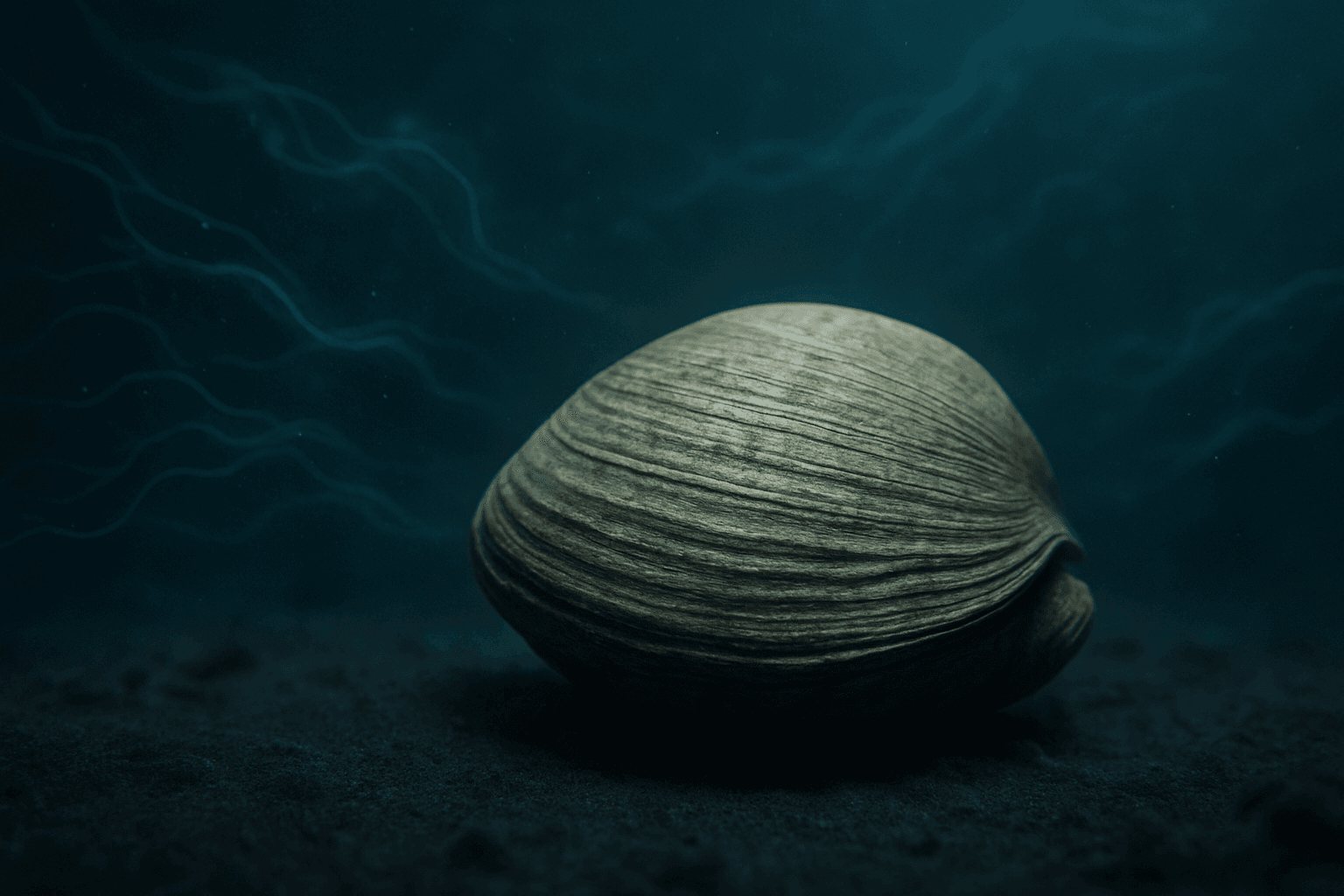
How a silent shellfish from Iceland is forcing scientists to rethink what really controls lifespan.
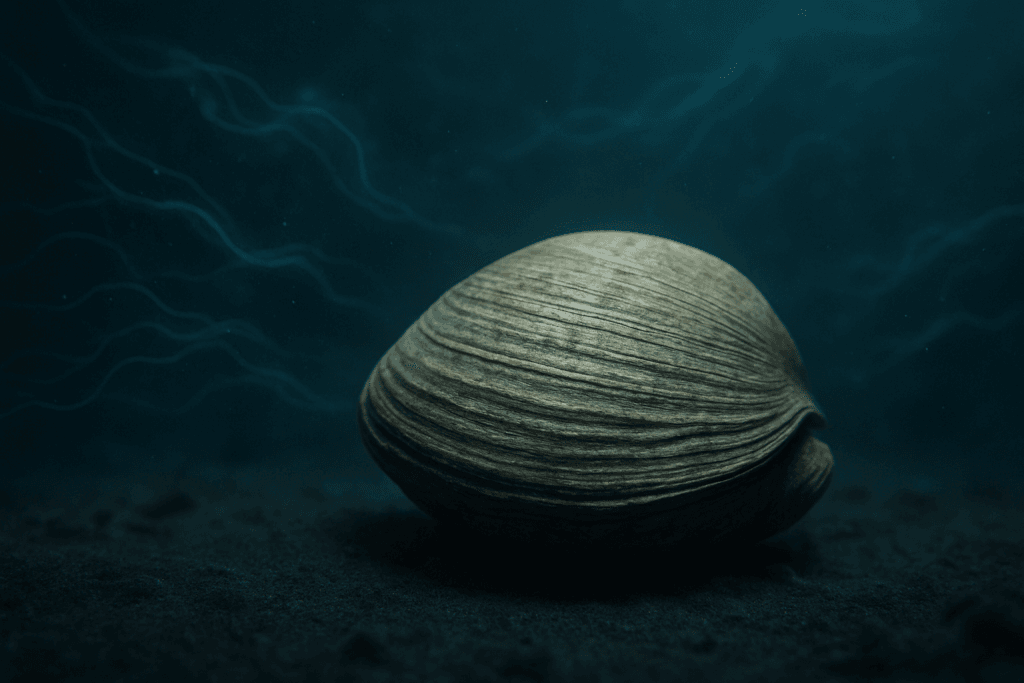
A small brown clam that lived off Iceland was already 100 years old when Shakespeare was born. When scientists finally counted its shell rings, they realised it had reached 507 years before it died in 2006.
That animal, the ocean quahog (Arctica islandica), is now the longest-lived non-colonial animal ever recorded. Inside its cells sits the real story: mitochondria that leak almost no “rust”, shrug off oxygen shocks and quietly keep working for centuries. Researchers are now asking a bold question: if a clam can do this, how far could we push human ageing by protecting our mitochondria too?
Key takeaways
- A single clam lived to at least 507 years, making Arctica islandica the record holder for longest-lived non-colonial animal.
- Its mitochondria are built like tanks, with a tougher fatty layer and cleaner electron flow that produce fewer cell-damaging molecules.
- It is a champion at mopping up “cellular exhaust”, neutralising some types of oxidative damage up to 3 to 14 times better than shorter-lived clams.
- It evolved in dark, low-oxygen mud, so its cells learned to shut down and restart without the usual damage that comes from oxygen “whiplash”.
- For humans, the realistic playbook is mitochondrial care: exercise, metabolic health and targeted future drugs that copy pieces of the quahog’s stress shield.
Meet the animal that outlived empires
🐚 The ocean quahog looks boring. Its lifespan is not.
This clam lives buried in cold seafloor mud around Iceland, the North Atlantic and parts of North America. It barely moves, filters food from the water and quietly adds a thin ring to its shell each year. By slicing the shell and counting those rings, scientists confirmed that one individual, nicknamed Ming or Hafrún, reached 507 years old, beating every turtle, whale and shark with a precisely known age.
🕰️ Ageing it was like reading a 500-year climate diary.
Researchers at Bangor University used the shell rings not only to count age but also to reconstruct past ocean conditions. Each ring stores information about temperature and nutrients. That is how they verified the original 400-year estimate and then corrected it to 507 years using cross checks and radiocarbon dating.
🌍 Officially, this clam now holds the Guinness World Record for longest-lived non-colonial animal. It hatched around the late 1490s, long before telescopes, steam engines or antibiotics existed.
Inside the clam: why its mitochondria hardly “rust”
🔥 To understand the quahog’s superpower, you need one idea: When cells use oxygen to turn food into energy, they also create a bit of “exhaust”. These are reactive oxygen species, often called ROS. In small amounts they are normal. In high amounts they nick DNA, damage proteins and slowly wear out the cell.
🧱 Quahog mitochondria have a tougher outer layer
In 2012, Daniel Munro and Pierre Blier compared the fatty makeup of mitochondrial membranes in different clam species. Quahogs had a very special pattern. The fats in their mitochondrial “skin” were less prone to oxidation, which means they did not go rancid as easily. Across multiple species, they found a simple rule:
- The more fragile the mitochondrial fats, the shorter the lifespan.
- Arctica islandica sat at the extreme “stable” end and also had the longest life.
Think of it as using stainless steel instead of cheap iron for the key moving parts of your energy engine.
⚙️ Its energy chain leaks less “spark”
Mitochondria pass electrons along a chain of protein complexes to make ATP, the cell’s fuel. Each leak in that chain can form ROS. In quahogs, these proteins are bigger, more closely packed and more connected, so electrons move more smoothly. Studies show:
- The clam’s respiratory complexes form tightly bundled “super-complexes”.
- This layout helps keep electrons on track and cuts random leaks that would form ROS.
In plain language, their mitochondria are wired like high end electrical systems with excellent insulation, not like a tangle of frayed extension cords.
🧯 They are also much better at cleaning up the mess
Even with less leak, some ROS still appear. Newer work from Munro and colleagues tested how fast mitochondria from different bivalves could handle hydrogen peroxide, a common ROS molecule. Arctica islandica stood out:
- Its mitochondria could neutralise H₂O₂ 3 to 14 times faster than those of short lived clams.
- Damage markers like lipofuscin and oxidised proteins rise very slowly, even in clams over 150 years old.
So the quahog does two things at once: it produces less “exhaust” and has a next level cleaning crew for what remains.
Built for low oxygen, rewarded with long life
🌊 Life in the mud is harsh in a very specific way.
Ocean quahogs often sit buried under sediment where oxygen is low. They can clamp their shells shut for days, stop pumping water and ride out bad conditions. That means their cells must tolerate periods of very little oxygen, followed by a rush when they open again.
Normally, this pattern is dangerous. When oxygen suddenly returns, mitochondria tend to spit out a big burst of ROS. In heart attacks and strokes, this “reperfusion injury” is part of what kills tissue.
🫁 Quahog mitochondria handle oxygen whiplash without a meltdown
A 2021 study in the Journal of Experimental Biology exposed quahog cells to hypoxia and then reoxygenation. Researchers measured mitochondrial capacity and ROS at each step. They found:
- The clams keep enough capacity to restart metabolism after low oxygen.
- ROS spikes are much smaller than in many other animals during reoxygenation.
It is as if their mitochondria were trained for emergency restarts. That training likely comes from millions of years of daily life in patchy, low oxygen mud.
🧬 The genome now backs this story
In 2025, scientists published the first high quality genome of Arctica islandica. They found:
- A large, complex genome of about 1.78 billion base pairs.
- Expanded sets of genes involved in stress response, antioxidant defenses and DNA repair.
- Many tools linked to controlling damage from oxygen and keeping proteins folded correctly.
The picture is consistent. To survive repeated low oxygen episodes, the clam evolved mitochondria and stress systems that are incredibly hard to break. Extreme lifespan likely came along for the ride.
What this says about ageing in general
🧪 The quahog supports a refined mitochondrial theory of ageing
The old idea said ROS were the main driver of ageing. That turned out to be too simple. Many antioxidant pills failed to extend life in mammals. But the quahog suggests a smarter version:
- It is not about drowning the body in generic antioxidants.
- It is about where and how cleanly mitochondria burn fuel, and how well they are repaired when stressed.
In this view, long life is what happens when the “engine” runs clean and the workshop that maintains it rarely falls behind.
🧠 Other long lived animals show similar patterns
Naked mole rats live in low oxygen burrows and have unusual resistance to oxidative damage. Bowhead whales and Greenland sharks have slow metabolisms and strong stress responses. Humans living at high altitude, like Sherpas, show mitochondrial tweaks that help them use oxygen efficiently with less damage.
We are seeing a theme. When evolution solves the oxygen and stress problem in a clever way, extreme longevity often appears as a side effect.
Can humans copy any of this?
🏃 Lifestyle: the realistic part of the playbook right now
We cannot rewrite our genome to match a clam. But we can influence how our mitochondria behave. Human studies show that:
- Regular exercise increases mitochondrial number and efficiency, and improves how they handle ROS.
- Good metabolic health, enough sleep and not smoking all reduce chronic oxidative stress.
These interventions will not give you 500 years. They do seem to nudge your biology toward better mitochondrial “housekeeping” and slower wear.
❄️ Cold exposure is an intriguing, still early area
Some researchers, including those quoted in the New Scientist piece, suggest that cold showers or cold exposure may trigger mitochondrial quality control. Cold can activate brown fat and stress response pathways that help clean up damaged mitochondria. Evidence in humans is still early and small, but animal data support the idea that mild stress can improve mitochondrial function.
This is classic hormesis: a little controlled stress to build long term resilience.
🧬 Targeted therapies are slowly catching up
There is one famous mouse study where scientists directed the antioxidant enzyme catalase specifically into mitochondria. These mice lived about 20 percent longer than normal, with better heart health.
Future therapies may:
- Change the types of fats used in mitochondrial membranes.
- Boost specific antioxidant enzymes only inside mitochondria.
- Help the cell recycle broken mitochondria faster.
The quahog gives drug developers a clear target: copy the pieces of its system that keep mitochondria clean during stress, rather than chasing generic antioxidant pills.
What we still do not know
❓ We do not fully understand the trade offs
Why do not all animals evolve quahog-style mitochondria? There are likely costs. Very stable membranes and very careful metabolism may slow growth and reproduction. For a creature that sits in mud for centuries, that trade off works. For fast moving mammals, maybe less so.
🧪 We also do not know how much of this is copyable in humans
Tiny tweaks to mitochondrial function can have wide effects on metabolism, brain health and cancer risk. Any future therapy that changes how mitochondria burn fuel or handle ROS will need very careful testing. The goal is not to turn people into clams. It is to borrow the best ideas from clam biology without breaking the rest of our system.
The bottom line
A clam that was alive before Michelangelo painted the Sistine Chapel is teaching us something simple and powerful. Ageing speeds up when mitochondria leak a lot of “exhaust” and the body cannot keep up with repairs.
The ocean quahog shows the opposite case. Build a super stable mitochondrial shell, wire the energy chain neatly, clean up exhaust quickly, and you can keep cells working for hundreds of years. We are a long way from giving humans a 500 year lifespan, but we now have a living blueprint that shows just how far mitochondrial resilience can go.
Sources
- The surprising longevity lessons from the world’s oldest animal
https://wholelifecarbon.com/article/the-surprising-longevity-lessons-from-the-worlds-oldest-animal - The extreme longevity of Arctica islandica is associated with increased peroxidation resistance in mitochondrial membranes
https://pubmed.ncbi.nlm.nih.gov/22708840/ - Mitochondrial capacity and reactive oxygen species production during hypoxia and reoxygenation in the ocean quahog, Arctica islandica
https://pubmed.ncbi.nlm.nih.gov/34697625/