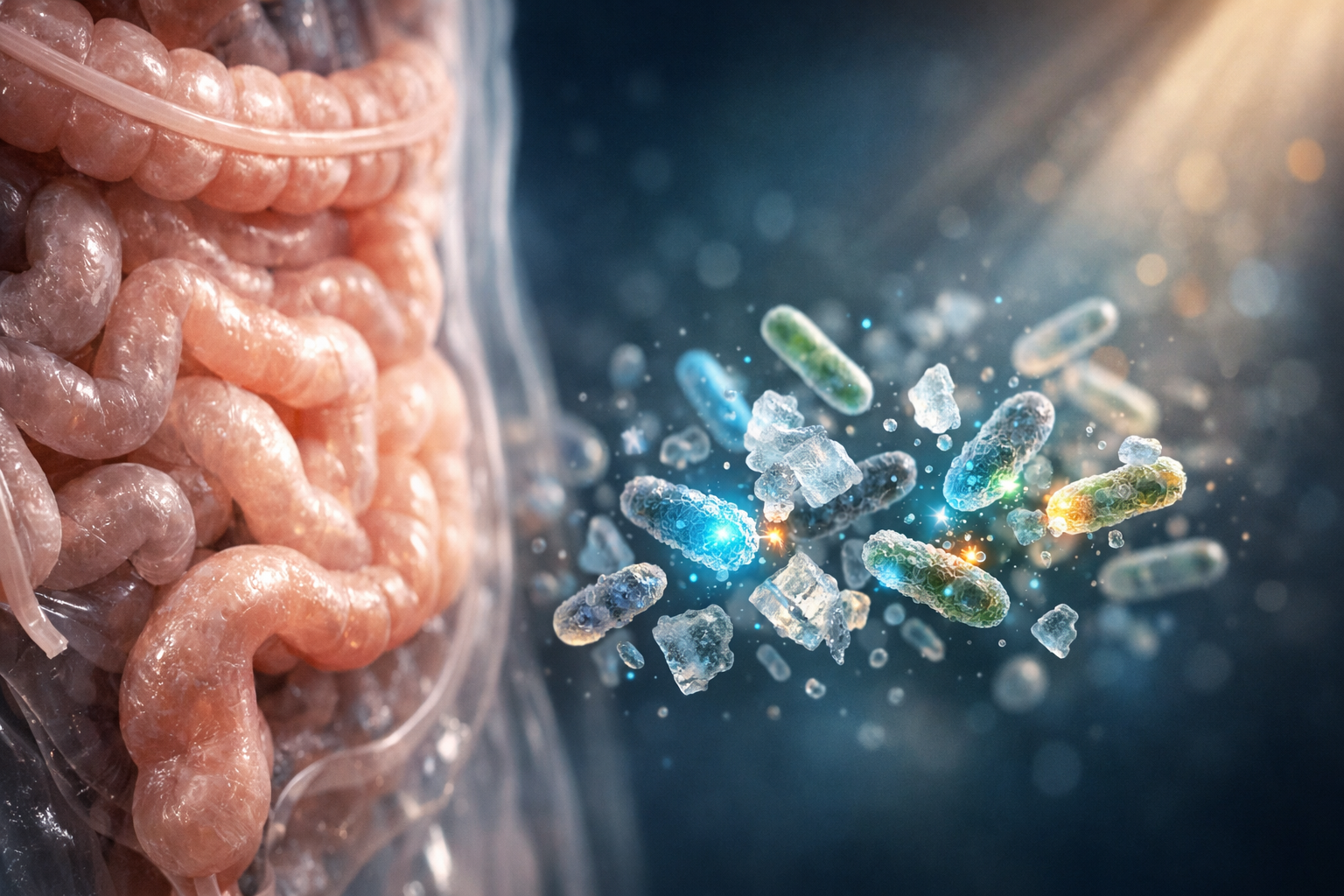
A new Nature study shows gut microbes evolving fast to handle modern foods. That raises a bigger, surprisingly hopeful question about what they might adapt to next.
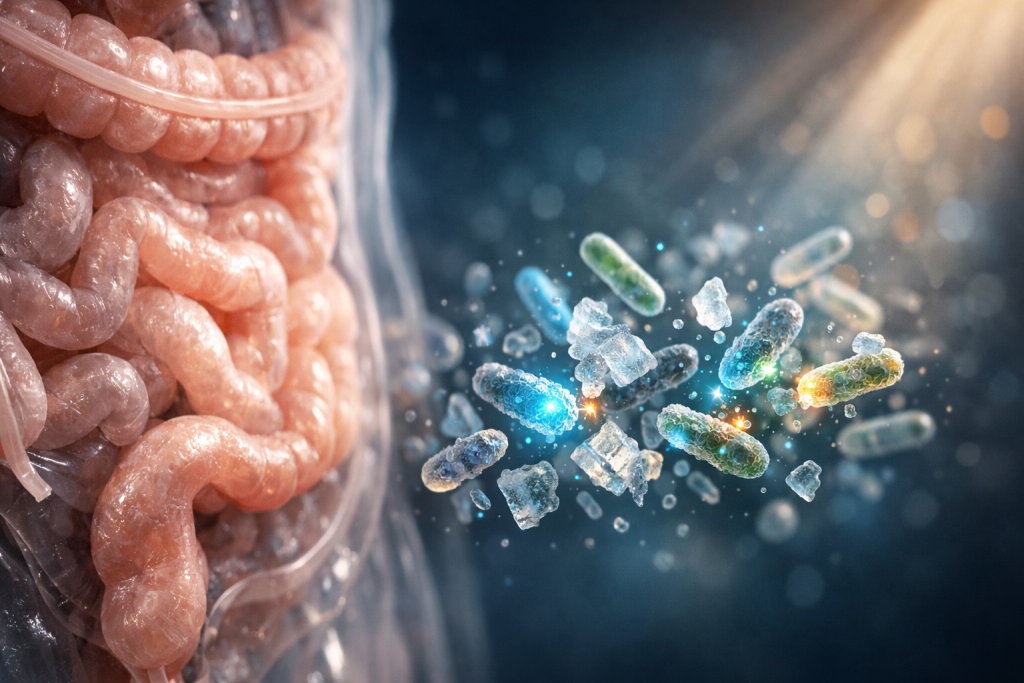
Every meal you eat feeds not just you, but trillions of bacteria that have one job: survive in whatever environment you give them. And according to a recent Nature study, those microbes are changing their DNA far faster than scientists once believed.
🧬 The twist is not just that gut bacteria are adapting to ultra-processed foods. It is what that speed of adaptation suggests. If microbes can evolve new abilities in just a few decades, it forces an uncomfortable and fascinating question.
Could gut bacteria eventually evolve to help deal with microplastics too?
Key Takeaways
- Gut bacteria are evolving in real time in response to modern diets
- These genetic shifts happened in decades, not thousands of years
- Microbes can rapidly share useful genes with each other
- The study focused on food ingredients, but the implications go further
- Fast microbial evolution hints at how bacteria might respond to other modern exposures, including microplastics
What the Study Actually Showed
🔬 Scientists analyzed the genomes of dozens of common gut bacteria collected from people around the world. They compared microbiomes from industrialized populations with those from communities eating traditional diets.
Bacteria living in industrialized guts showed clear signs of recent evolutionary pressure. Certain genes had spread rapidly through microbial populations, a classic sign of natural selection at work.
Most of these genes were tied to carbohydrate metabolism, especially the digestion of industrial starches that barely existed before the late 20th century.
One standout example is maltodextrin, a highly processed starch now found in everything from sports drinks to salad dressings. Fifty years ago, it was rare. Today, it is everywhere. Gut bacteria responded by evolving specialized enzymes to break it down efficiently.
🧠 That timeline matters. It shows that microbial evolution does not need centuries when the pressure is strong enough.
Why Microbes Adapt So Much Faster Than Humans
💡 Gut microbes reproduce in minutes or hours, not decades. Even more important, they can exchange genes directly with one another through horizontal gene transfer.
In plain English, bacteria can borrow survival tools from their neighbors.
If one microbe figures out how to digest a new ingredient, that solution can spread through the gut ecosystem like wildfire. That is exactly what seems to be happening in response to ultra-processed foods.
🧬 Evolution, in this case, is not abstract. It is happening inside you, driven by what you eat.
Why This Suddenly Makes Microplastics Interesting
Ultra-processed foods are not the only new thing humans are exposed to. Modern life also includes food additives, industrial chemicals, and microplastics that were nonexistent for most of human history.
Microplastics are chemically very different from starches. They are tougher, more complex, and harder to break down. But the key insight from this research is not about what microbes are digesting. It is about how fast they can adapt when pressure is consistent.
When exposure is widespread and unavoidable, microbes respond.
That principle already holds true in soil and ocean environments, where certain bacteria and fungi have evolved enzymes that slowly degrade specific plastics.
🧪 The gut is a very different ecosystem, but the evolutionary engine is the same. Variation, pressure, selection.
The Nature study does not show gut bacteria digesting microplastics today. But it does show something equally important. Microbial metabolism is far more flexible than we once assumed.
What This Means for Your Health Right Now
🧠 Your microbiome helps regulate digestion, immunity, inflammation, and even brain signaling. When diets shift faster than biology evolved to handle them, microbes are forced to adapt or disappear.
In industrialized countries, that pressure is intense:
Ultra-processed foods now make up roughly 60 percent of calories in the average American diet, yet many of their ingredients are evolutionarily brand new. The microbiome is scrambling to keep up.
Some microbes adapt and thrive. Others drop out. That reshuffling may help explain why ultra-processed diets are linked to metabolic disease, gut inflammation, and immune dysfunction.
At the same time, the study highlights something hopeful. The microbiome is not passive. It is resilient, dynamic, and constantly experimenting.
Traditional Diets Show the Other Side of the Story
In communities eating minimally processed foods, gut bacteria showed evolutionary patterns shaped by whole starches like plantains, cassava, and intact grains.
Those foods have been part of human diets for thousands of years. The microbial ecosystem there looked more stable, with fewer signs of rapid genetic change.
That contrast is revealing.
It suggests that the microbiome does best when it is not forced into constant evolutionary catch-up. Stability, not speed, appears to support long-term health.
So Will Gut Bacteria Ever Digest Microplastics?
💭 The honest answer is: we do not know.
What we do know is that microbes have repeatedly surprised scientists. Enzymes once thought impossible have evolved before. Metabolic pathways once considered unlikely now exist in nature.
Breaking down plastics is much harder than digesting starch. It would require entirely new biochemical tricks. But evolution does not plan ahead. It responds to pressure.
🧬 The takeaway is not panic or hype. It is humility. We are only beginning to understand how adaptable our microbial partners really are.
The Bigger Lesson
It is about what happens when humans change their environment faster than biology expects. The microbes living inside us respond first, fastest, and most dramatically.
🧠 Whether that adaptability becomes a liability or an asset depends largely on the world we create for them.
For now, the safest move is simple. Feed your gut what it evolved alongside for most of human history. Whole foods. Fiber. Diversity.
But keep watching the microbes. They are already teaching us that evolution is not a relic of the past. It is happening right now, and it may shape how we deal with some of the most modern problems of all.
Sources
- Gene-specific selective sweeps are pervasive across human gut microbiomes. https://www.nature.com/articles/s41586-025-09798-y
- Gut bacteria evolved rapidly to digest starches in ultra-processed foods.
https://newsroom.ucla.edu/releases/gut-bacteria-evolved-rapidly-digest-starches-ultra-processed-foods