The biology of connection, pleasure, and emotional regulation.
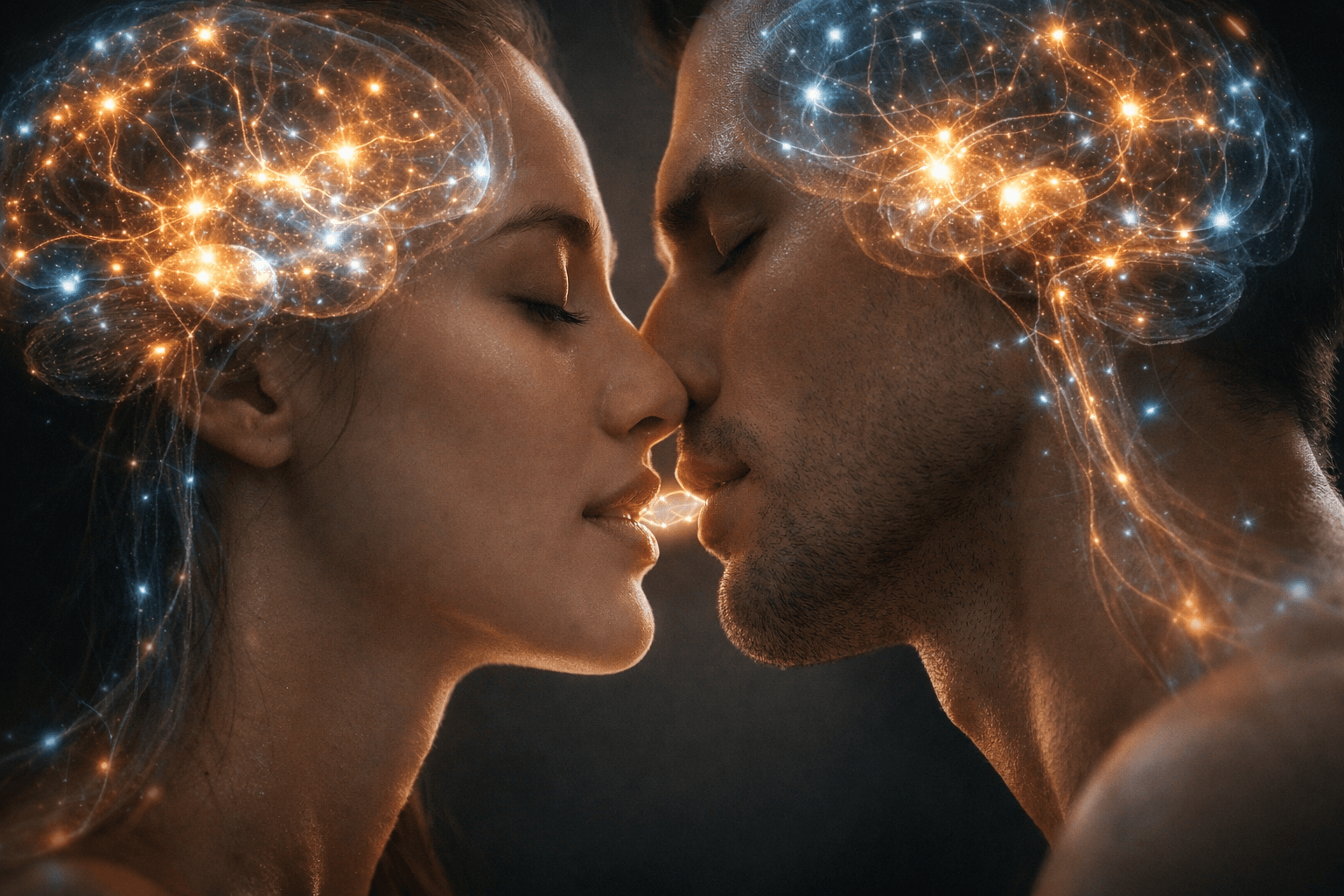
Kissing isn’t just romantic; it’s one of the most neurologically sophisticated behaviors humans engage in. When you kiss someone you care about, you’re triggering a cascade of neurochemical responses that influence everything from motivation to emotional balance.
Here’s what happens in your brain and body when intimacy enters the picture.
Key takeaways
- Kissing activates dopamine, oxytocin, and endorphins, reinforcing pleasure and attachment
- Intimacy signals safety to the nervous system, influencing emotional regulation
- Love works through reward and bonding circuits, not vague “feel-good” effects
- Connection shapes stress perception, which drives downstream physiology
- These mechanisms are built-in human biology, not lifestyle tricks
Your Brain on Dopamine: The Motivation Molecule
💡 Romantic and sexual intimacy reliably activate dopamine pathways in the brain’s reward system. Dopamine sharpens your focus, heightens anticipation, and makes experiences feel significant and memorable.
When you kiss someone, dopamine doesn’t just create pleasure; it teaches your brain that this person matters. That’s why intimacy can feel energizing and why certain moments become deeply etched in memory. Over time, these dopamine-driven experiences strengthen pair bonding and emotional attachment, making relationships feel increasingly meaningful.
Oxytocin: The Chemistry of Connection
💞 Physical intimacy, including kissing, stimulates oxytocin release, particularly between bonded partners in emotionally safe contexts. Oxytocin enhances feelings of trust, closeness, and emotional attunement, creating that sense of being truly “with” someone rather than just near them.
According to research on partner embraces, physical affection before stressful situations can reduce cortisol response in women, demonstrating how touch literally changes our stress biology.
This is why kissing feels profoundly different depending on who you're with. The chemistry responds to emotional context, amplifying genuine connection. In established relationships, oxytocin helps explain why affectionate rituals feel stabilizing and reassuring, creating a foundation of emotional security.
Endorphins: Natural Mood Enhancement
😊 Pleasurable touch activates your body’s endogenous opioid system, releasing endorphins that elevate mood and promote relaxation. These effects are gentle but consistent; endorphins reduce emotional friction and make it easier to relax into the present moment.
Key benefits of endorphin release through intimacy:
- Mild euphoria and elevated mood
- Reduced perception of stress and discomfort
- Enhanced relaxation and emotional ease
- Cumulative effects on baseline emotional tone over time
From a nervous system perspective, repeated experiences of pleasure and safety gradually recalibrate your baseline emotional tone, influencing how resilient and balanced you feel day to day.
Stress Regulation Through Connection
🌿 Affectionate intimacy can fundamentally shift how your nervous system evaluates threat. When closeness and connection are present, your brain often interprets the environment as safer, which changes autonomic tone and emotional reactivity.
In some cases, this shows up as measurable hormonal changes. In others, it manifests as emotional grounding, reassurance, or release. Either way, the mechanism is powerful: connection alters perception, and perception drives physiology. Humans evolved to regulate stress collectively, not in isolation, and intimacy is how we share that regulation.
Why Kissing Is Uniquely Powerful
Kissing engages an extraordinary number of sensory and emotional systems simultaneously:
- Touch and pressure from highly sensitive lips and facial nerves
- Smell and taste providing chemical information about compatibility
- Anticipation and reward activating motivation circuits
- Emotional meaning and memory creating lasting significance
Few behaviors create this level of sensory convergence. This is why a simple kiss can feel disproportionately powerful; it’s neurological coordination between two nervous systems, not just physical contact. 💋
The Foundation of Human Wellbeing
✨ From a biohacking perspective, love and intimacy aren’t lifestyle add-ons. They’re core regulatory inputs that the human nervous system evolved to expect and respond to.
These experiences tune reward systems, stabilize emotional states, and reinforce the social bonds that support wellbeing across the lifespan. When intimacy is present, regulation comes more easily. When it’s absent, other systems work harder to compensate.
Kissing is one powerful expression of this biology: a small act carrying a significant signal to the brain about safety, connection, and meaning.
Promising Potential Benefits: Where Science Is Heading
🔬 While some claims about kissing need more research, there are intriguing connections worth exploring between intimacy and broader physiological health.
Stress and inflammation: Chronic stress is a well-established driver of systemic inflammation. Since affectionate intimacy can modulate stress responses and cortisol levels, there’s a reasonable biological pathway through which regular intimate connection might indirectly support healthier inflammatory markers over time. While we don’t yet have direct studies measuring CRP or IL-6 changes from kissing specifically, the stress-inflammation connection suggests potential benefits worth investigating.
Facial muscle engagement: Kissing involves coordinated activation of multiple facial muscles, including the orbicularis oris and surrounding musculature. While this alone doesn’t directly stimulate collagen synthesis in the way that certain skincare treatments or nutritional interventions do, increased blood flow and muscle activity in facial tissue could theoretically support overall skin health and tissue vitality. More research is needed to understand if regular facial muscle engagement through kissing contributes to long-term dermal health.
Cardiovascular considerations: The brief elevation in heart rate and potential improvements in mood and stress regulation could, over a lifetime of regular affectionate behavior, contribute to overall cardiovascular wellbeing. While kissing isn’t exercise, the cumulative effects of reduced stress and enhanced emotional connection may support heart health through indirect pathways.
These potential benefits represent areas where the intersection of emotional wellbeing and physical health deserves deeper scientific investigation. 💚
Remember This:
Love, intimacy, and kissing activate some of the brain’s most fundamental systems for reward, bonding, and emotional regulation. They work because they speak the nervous system’s native language, not through abstract symbolism, but through direct biological signaling.
Sources
- The impact of oxytocin on stress: the role of sex
https://pubmed.ncbi.nlm.nih.gov/31745496/ - Oxytocin and love: Myths, metaphors and mysteries
https://pubmed.ncbi.nlm.nih.gov/35755926/ - Romantic partner embraces reduce cortisol release after acute stress induction in women but not in men
https://pubmed.ncbi.nlm.nih.gov/35584124/ - Self-soothing behaviors with particular reference to oxytocin
https://pubmed.ncbi.nlm.nih.gov/25628581/