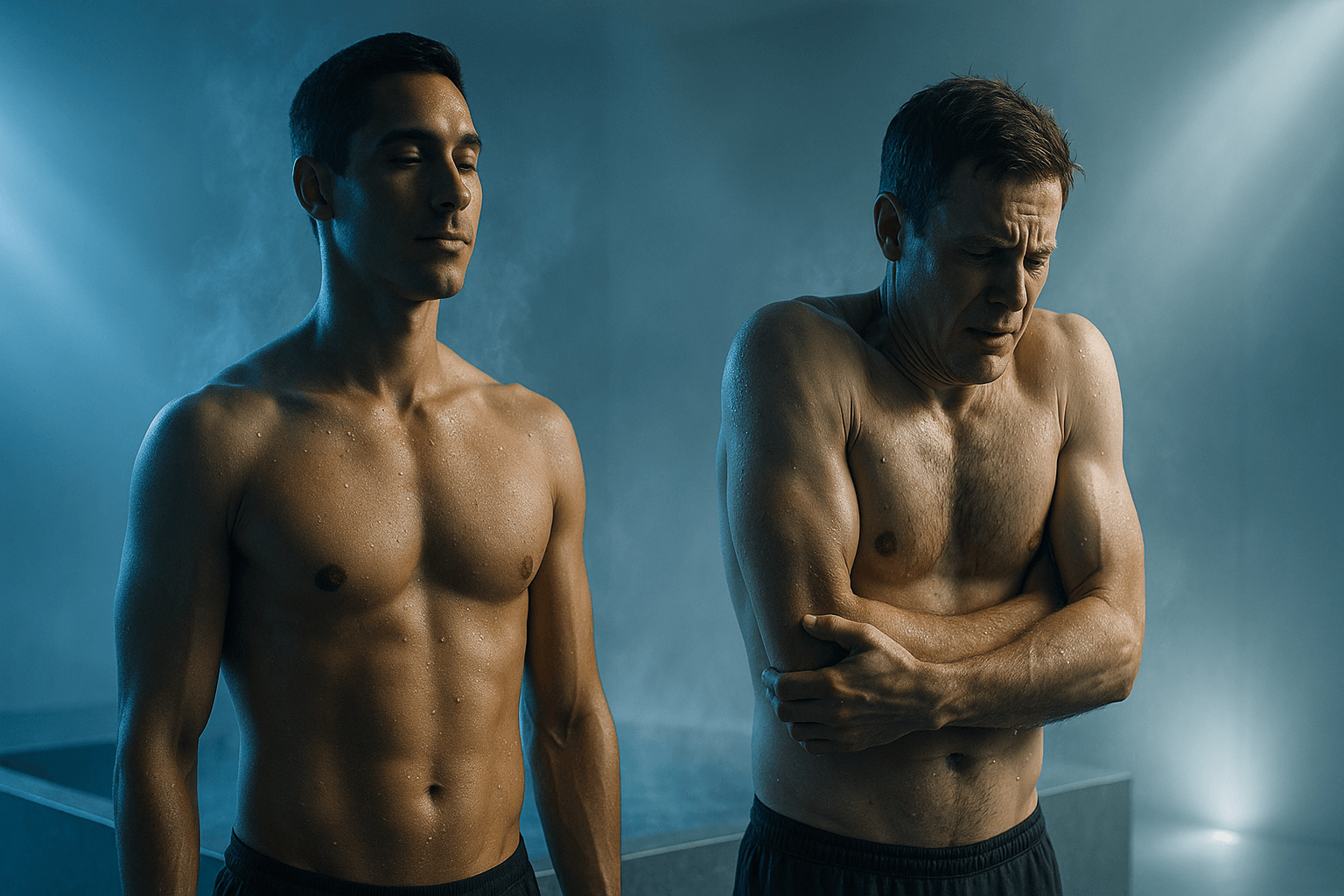
The science behind cold exposure reveals why some people thrive while others just shiver, and how to find your optimal stress dose.
You’ve seen the Instagram posts. Ice baths at sunrise. Cold plunges with motivational captions. Biohackers swearing that freezing water changed their lives.
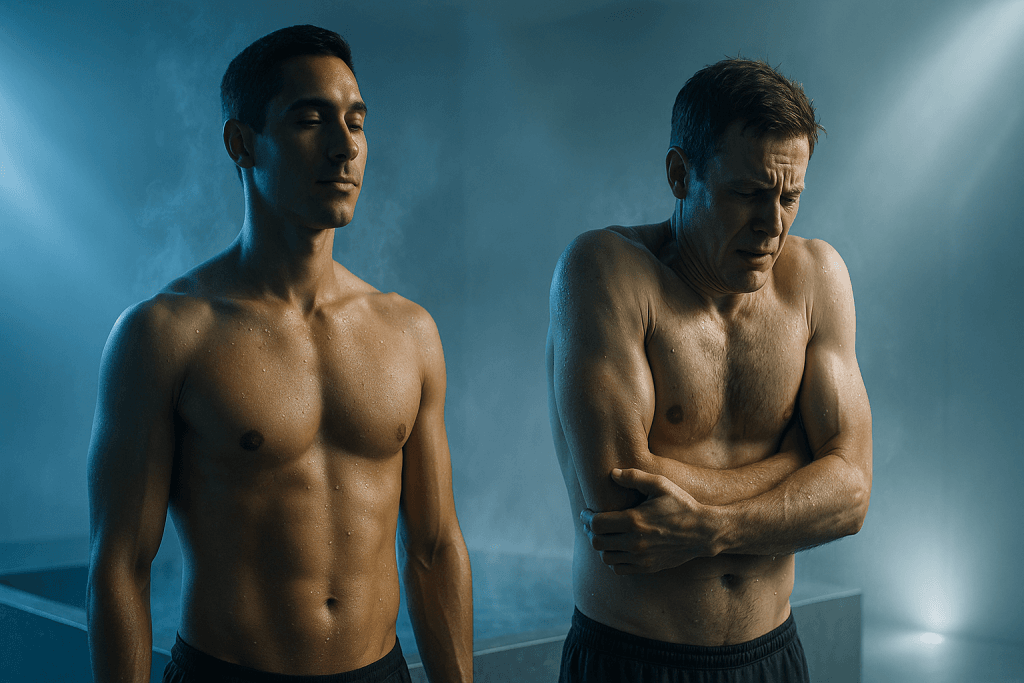
But here’s what nobody talks about: cold exposure works brilliantly for some people and does absolutely nothing, or worse, for others. New research into stress hormones, genetic variants, and nervous system responses is finally explaining why your friend gets superhuman energy from cold showers while you just feel miserable and exhausted.
The difference isn't willpower. It's biology.
Key Takeaways
- Cold exposure triggers hormesis, a beneficial stress response that only works at the right dose for your individual system
- Genetic variants in the COMT gene determine how quickly you clear stress hormones, affecting your cold tolerance dramatically
- Your nervous system baseline matters more than the temperature. Chronically stressed people often get worse from adding cold stress
- Brown fat activation varies 5-fold between individuals, explaining why some people feel energized while others just feel cold
- Strategic timing and duration (2-3 minutes at 50-59°F) works better than extreme protocols for most people
The Hormesis Sweet Spot Nobody Mentions
❄️ Cold exposure works through hormesis. That’s the principle that small doses of stress make you stronger. When you hit cold water, your body releases norepinephrine, activates brown fat, and triggers adaptation pathways that can improve metabolism, mood, and resilience.
But here’s the catch: hormesis has a dose-response curve. Too little stress and nothing happens. Too much and you damage yourself instead of adapting.
Most cold plunge enthusiasts assume colder is better. The data shows otherwise.
A 2023 study in the Journal of Applied Physiology found that water temperature between 50-59°F triggered optimal metabolic benefits without the cortisol spike seen in ice baths below 40°F. The researchers tracked 67 participants over 8 weeks.
The moderate cold group showed a 23% increase in brown fat activity and improved insulin sensitivity. The extreme cold group? Higher cortisol, worse sleep quality, and no additional metabolic benefit.
Your Genes Determine Your Cold Response
🧬 Not everyone clears stress hormones at the same rate. The COMT gene controls an enzyme that breaks down dopamine, norepinephrine, and adrenaline. Those are the exact chemicals flooding your system during cold exposure.
There are two main variants: fast COMT and slow COMT.
If you have fast COMT, you clear stress hormones quickly and can handle aggressive cold protocols. If you have slow COMT, those hormones linger. Cold exposure can leave you feeling wired, anxious, and depleted for hours.
Dr. Andrew Huberman discussed this on his podcast with genetics researcher Dr. Rhonda Patrick. “People with slow COMT often report feeling worse after cold exposure, not because they’re weak, but because their system stays activated too long.”
This explains why some biohackers rave about 10-minute ice baths while others feel like they got hit by a truck. It's not about toughness. It's about biochemistry.
Brown Fat: The Variable Everyone Ignores
🔥 Brown adipose tissue (BAT) is the metabolic furnace that makes cold exposure valuable. Unlike regular white fat that stores energy, brown fat burns calories to generate heat. Cold activates it.
But here’s what matters: baseline brown fat levels vary dramatically between people. A landmark study in Nature Medicine found that brown fat activity differs by up to 5-fold in healthy adults of the same age and weight.
People with high brown fat activity feel energized and warm up quickly after cold exposure. People with low brown fat activity just feel cold and miserable. Their bodies literally can’t generate the metabolic response that creates the benefits.
The good news? Brown fat can be increased over time with consistent, moderate cold exposure. But if you start with low levels and immediately jump into extreme protocols, you're setting yourself up for a terrible experience and likely quitting before adaptation happens.
Your Nervous System Sets Your Threshold
⚡ Here’s the part the cold plunge evangelists miss: cold exposure adds stress to your system. If your nervous system is already running hot (chronic work stress, poor sleep, overtraining, relationship issues), adding more physiological stress can push you over the edge.
Cold exposure works best when you’re well-rested, adequately recovered, and operating from a parasympathetic baseline. When you’re already sympathetic-dominant (fight-or-flight), cold can worsen anxiety, disrupt sleep, and tank your energy.
A 2024 study in Frontiers in Physiology tracked heart rate variability (HRV) in cold exposure participants. Those with high baseline HRV showed improved recovery metrics. Those with low HRV saw worse recovery markers and reported increased fatigue.
The researchers concluded: “Cold exposure should be considered an advanced recovery tool, not a first-line intervention for stressed individuals.”
What Actually Works: The Flexible Protocol
🎯 Instead of following someone else’s extreme protocol, here’s what the research supports for most people:
- Start with contrast therapy. Alternate 30 seconds cold with 1 minute warm for 3-4 rounds. This gives you hormetic benefits without overwhelming your system. Once you adapt (usually 2-3 weeks), you can extend cold duration.
- Find your temperature sweet spot. For most people, 50-59°F triggers adaptation without excessive cortisol. You should feel uncomfortable but able to control your breathing. If you’re gasping and panicking, it’s too cold.
- Time it strategically. Morning cold exposure boosts alertness and dopamine. Evening cold exposure can disrupt sleep in some people. Pay attention to your individual response.
- Track your recovery markers. Monitor resting heart rate, HRV, sleep quality, and subjective energy. If these worsen, you’re overdoing it.
When Cold Isn’t the Answer
Here’s what most biohackers won’t tell you: cold exposure isn’t always the right tool. If you’re dealing with chronic stress, poor sleep, or overtraining, your body might need less stress, not more.
Think of your stress capacity like a bucket. Work stress, relationship issues, hard training, poor sleep. All of these fill the bucket. Cold exposure adds more water. If your bucket is already overflowing, cold won’t help you adapt. It’ll just make the mess worse.
The smartest biohackers know when to push and when to back off. If cold makes you feel worse consistently, that's data. Listen to it.
The Bottom Line
Cold exposure isn’t a universal hack. It’s a tool that works when matched to your individual biology, stress load, and recovery capacity.
If you’re someone who thrives on cold plunges, great. Keep doing them. But if you’ve tried cold showers and felt worse, you’re not broken.
You might have slow COMT genetics, low brown fat, or an already-stressed nervous system that needs different interventions first. Sleep optimization, stress management, and nervous system regulation might be your foundation before adding cold.
The best biohack isn't the most extreme one. It's the one that actually works for your body.
Sources
- Identification and importance of brown adipose tissue in adult humans (N Engl J Med, 2009) https://www.nejm.org/doi/full/10.1056/NEJMoa0810780
- The Effect of Cold Showering on Health and Work: A Randomized Controlled Trial (PLOS ONE, 2016) https://journals.plos.org/plosone/article?id=10.1371/journal.pone.0161749
- Effects of cold-water immersion on health and wellbeing: A systematic review and meta-analysis (PLOS ONE, 2025)
https://journals.plos.org/plosone/article?id=10.1371/journal.pone.0317615