
Your blood vessels might be aging faster than you think. A new clinical trial shows a simple supplement could help turn back the clock in just 30 days.

By age 60, your body produces less than half the nitric oxide it once did 💔. That invisible molecule, vanishing from your bloodstream in seconds, might be one of the most important factors determining how well you age.
Now, fresh data from a randomized, placebo-controlled trial published in October 2025 suggest we might be able to do something about it. And the results are honestly pretty remarkable.
Key Takeaways
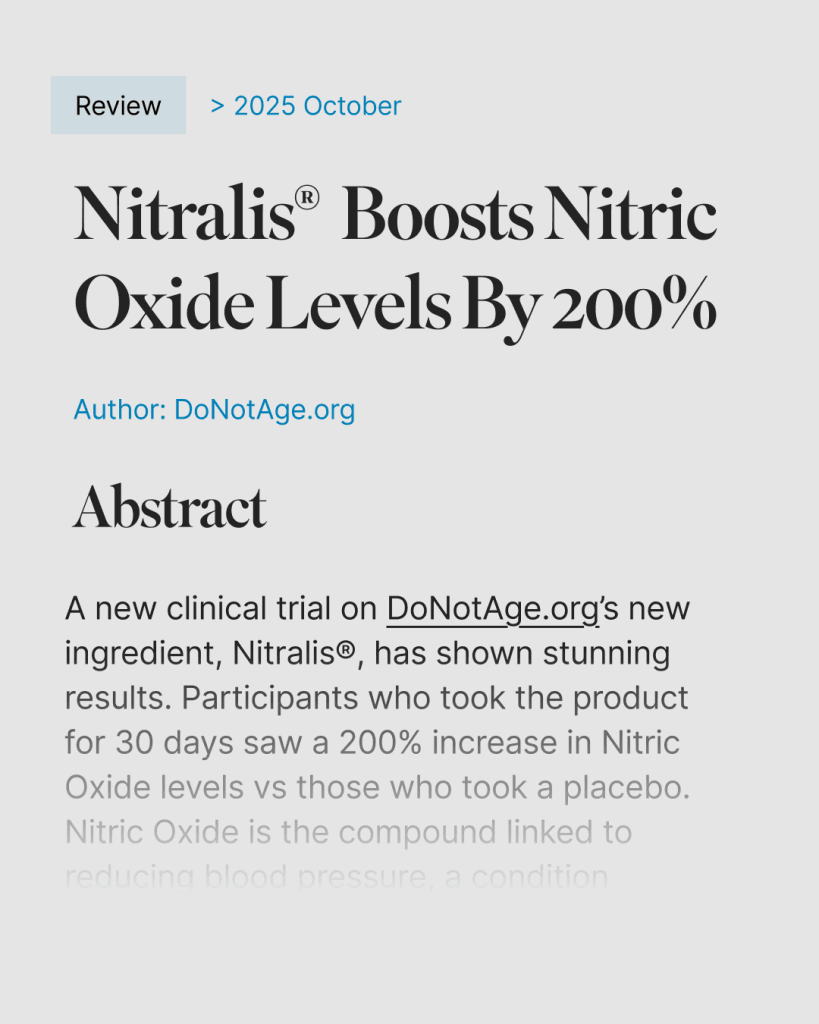
- Nitralis boosted nitric oxide by +226% in 30 days in a new randomized trial.
- 60.5% of users saw meaningful NO increases vs just 11.9% on placebo.
- NO decline drives vascular aging, blood pressure issues, and lower energy.
- Nitralis targets multiple NO pathways with fermented beet, magnesium ascorbate, and epimedium.
- Changes appeared within 24 hours and grew across the month.
The Nitric Oxide Problem Nobody Talks About
💡 Here’s what’s happening inside your body right now: nitric oxide (NO) is a tiny signaling molecule that keeps your blood vessels relaxed, your blood flowing smoothly, and your cells getting the oxygen they need. It is basically the oil in your body’s engine.
But here’s the brutal part. As we age, oxidative stress, chronic low-grade inflammation, and a steady decline in nitric oxide all team up to stiffen our arteries. By middle age, that decline becomes serious. Researchers now see falling NO production as a core part of vascular aging and tissue perfusion problems.
Think about it like this: when you’re young, your blood vessels are like brand new garden hoses, flexible and responsive. As NO declines, those hoses get stiff, narrow, and less efficient. Your heart has to work harder. Your brain gets less oxygen. Your muscles fatigue faster 😓.
The science is clear: arterial stiffness is one of the earliest markers of vascular aging, driven in large part by endothelial dysfunction and low nitric oxide.
Why You Should Care (Even If You Feel Fine)
🫀 This is not just about “old age.” Vascular aging starts silently and early. You can feel great and still have declining NO. The problem is that NO touches almost everything:
- Your blood pressure 💉: Lower NO means stiffer arteries and higher pressure
- Your exercise capacity 🏃: Less NO reduces oxygen delivery to working muscles
- Your brain function 🧠: Reduced blood flow affects memory and cognitive performance
- Your metabolic health ⚡: NO helps regulate insulin sensitivity and glucose handling
- Your heart’s workload ❤️: Stiff vessels make your heart pump harder every single day
This NO-driven vascular aging and tissue hypoperfusion interfere with delivering oxygen and nutrients, clearing waste, and supporting immune function. That, in turn, switches on multiple aging pathways at once.
In plain English: when NO drops, a whole cascade of aging processes speeds up. When you support NO, you help slow that cascade down.
The New Nitralis Study: What Actually Happened
🧪 A new 85-person randomized, placebo-controlled trial tested a supplement called Nitralis to see if it could boost nitric oxide levels in real-world adults aged 30 to 70. This was not a petri-dish experiment. These were everyday people.
Here is what the researchers did:
The Setup:
- 85 adults aged 30–70
- One group took Nitralis daily (fermented beet, magnesium ascorbate, epimedium)
- The other group took identical-looking placebo pills
- Nobody knew who got what (double-blind design)
- Salivary NO was measured at baseline, Day 1, Day 15, and Day 30
🔥 The Results Were Strong:
- Median NO increase: Nitralis group jumped +90 units vs 0 in placebo
- Mean NO increase: Nitralis averaged +108 units
- Responder rate: 60.5% of Nitralis users hit the +70-unit threshold vs 11.9% on placebo (about a 5x difference 🚀)
- Percentage change: About +226% average increase (median +64%) relative to baseline
To put that in perspective: more than 6 out of 10 people taking Nitralis saw meaningful rises in their NO levels. In the placebo group, it was about 1 in 10.
Even better, this was not a slow, vague trend. Changes started within 24 hours and kept building through the full month.
“For a 30-day nutrition trial, seeing this size of nitric oxide jump is unusually impressive.”
Why This Formula Might Work Better Than Just Eating Beets
🥤 You have probably heard about beetroot juice and nitric oxide. Athletes drink it before races. Beetroot juice has been shown to support exercise performance and help reduce blood pressure in both healthy and hypertensive people.
But Nitralis is designed to go beyond “just beets.” It hits nitric oxide from three directions at once.
The Three-Way Attack
- Fermented beet
- Rich in dietary nitrate, the raw material your mouth bacteria convert to nitrite and then to NO.
- Magnesium ascorbate
- Combines magnesium and vitamin C.
- Acts as an antioxidant shield, helping protect NO from being destroyed too quickly by oxidative stress.
- Epimedium
- Contains plant compounds that may boost your natural NO-producing enzyme (eNOS).
🏗️ Think of it like this: regular beetroot gives you bricks. Nitralis gives you bricks, scaffolding, and a better construction crew.
The synergy matters. Consuming dietary nitrates enhances the nitrate → nitrite → nitric oxide pathway and has been linked to healthier aging through interactions with the oral microbiome, gut microbiota, and stomach acidity. Nitralis simply leans hard into that entire system.
What Decades of Research Tell Us About NO and Aging
📚 This is not a 2025 trend. Scientists have been obsessed with nitric oxide for decades. Louis Ignarro even won a Nobel Prize for uncovering how NO works in the cardiovascular system.
Here is the big picture:
From Blood Pressure Studies
Beetroot and nitrate-rich supplements are a cost-effective strategy that can reduce blood pressure by about 4–8 mmHg in many trials, likely through the nitrate / nitrite / nitric oxide pathway. That is a meaningful drop at a population level.
From Exercise Research 💪
When NO is higher, your muscles use oxygen more efficiently. Many studies show people can do the same work with less oxygen after nitrate supplementation. That is a big win for endurance and recovery.
From Aging Studies
Aging is associated with less angiogenesis (the growth and maintenance of blood vessels) and more vascular stiffness. This shift is closely tied to endothelial cell aging and reduced NO signaling. Support NO and you support healthier, more responsive blood vessels.
From Brain Health Research 🧠
Vascular dementia and other cognitive issues are linked to reduced NO and endothelial dysfunction. Healthier blood flow is one of the most straightforward ways to protect the brain over time.
The pattern is crystal clear: when nitric oxide goes down, risk goes up. When nitric oxide is supported, systems across the body tend to work better.
How to Actually Boost Your Nitric Oxide (Beyond Supplements)
🌱 Supplements can be powerful tools, but they work best on top of solid lifestyle basics. If you care about NO, here are high-impact moves backed by research:
1. Eat More Leafy Greens and Beets 🥬
Arugula, spinach, kale, lettuce, and beetroot are nitrate powerhouses. Your mouth bacteria convert those nitrates into NO.
2. Rethink Antibacterial Mouthwash 🚫
That “super clean” feeling can come with a hidden cost. Strong antiseptic mouthwashes can wipe out the very bacteria that convert nitrate to NO. Studies show that changes in the oral microbiome with mouthwash can reduce NO bioavailability and worsen blood pressure.
3. Exercise Regularly 🏋️
Movement is one of the most reliable NO boosters. Physical activity ramps up eNOS activity and supports flexible, responsive blood vessels. Even brisk walking helps.
4. Get Some Sunlight ☀️
Brief, sensible sun exposure can trigger the release of NO stored in your skin, helping relax blood vessels and support lower blood pressure.
5. Take Care of Your Oral Health 🦷
Healthy gums and a balanced oral microbiome make the nitrate → nitrite → NO pathway work better. Think brushing, flossing, and regular dental care without overusing harsh antiseptics.
“Think of nitric oxide as a daily lifestyle lab. Every bite, every step, and every product in your bathroom can move the needle.”
Nitralis fits into this picture as a targeted accelerator, not a replacement for the basics.
The Limitations You Should Know About
🔍 Even with such positive results, it is good to understand what this study does and does not tell us yet.
What It Shows:
✅ Nitralis significantly increases measurable salivary NO
✅ The effect is strong and seen in a clear majority of users
✅ Changes appear quickly and build over 30 days
✅ No adverse events were reported in this trial
What It Does Not Show (Yet):
❌ Direct changes in blood pressure in this specific group
❌ Direct measurements of arterial stiffness or flow-mediated dilation
❌ Long-term effects beyond 30 days
❌ Head-to-head comparison with high-dose beetroot juice alone
The researchers themselves highlight the short duration and the use of salivary strips instead of more advanced vascular tests. That said, as a first clinical step, this is an unusually encouraging data set.
What Makes This Relevant Right Now
🚀 In 2025, longevity science is exploding. You hear about senolytics, NAD+ boosters, rapamycin, gene therapies. Exciting, yes. Simple and accessible, not really.
Vascular health is different:
- It is measurable (you can track NO with home strips, blood pressure cuffs, and wearables)
- It is modifiable (diet, exercise, oral care, light exposure, and targeted supplements all matter)
- It is foundational (every organ you care about needs good blood flow)
- It is accessible (you do not need a research hospital to get started)
Think of nitric oxide as an essential foundation of healthy aging 🏛️. It is quiet, it is invisible, and it touches everything from your brain to your toes.
Should You Care About NO?
🎯 If you are over 40, you should absolutely care about nitric oxide. If you have high blood pressure, metabolic issues, or a family history of heart disease, NO is not optional. It is central. If you are an athlete or just want more energy and better recovery, NO is a performance lever you cannot ignore.
The Nitralis study adds exciting evidence that we can strongly and measurably push back against age-related NO decline in as little as 30 days. Whether you choose Nitralis, other nitrate supplements, or a pure food-first strategy, the message is the same:
👉 Supporting nitric oxide is one of the smartest, most realistic ways to protect your vascular system and your healthspan.
What Happens Next
🔬 The logical next steps are bigger, longer trials that track:
- Blood pressure
- Arterial stiffness and endothelial function
- Exercise performance and recovery
- Cognitive markers and real-world outcomes
While we wait for those, the low-hanging fruit is already clear:
- Eat more nitrate-rich vegetables
- Ditch or reduce strong antibacterial mouthwash
- Move your body daily
- Get some responsible sunlight
- Consider tracking your NO levels if you like data
If you are curious about trying a targeted NO supplement like Nitralis, talk with your doctor first, especially if you are on blood pressure medication or have cardiovascular conditions.
💪 Your blood vessels are aging right now, but you have real control over how fast that happens. Nitric oxide is one of the most powerful, practical levers you can pull today.
Sources
- Effect of a Proprietary Nitric Oxide Supplement (Nitralis) on Salivary Nitric Oxide Levels
https://biomedres.us/fulltexts/BJSTR.MS.ID.009914.php - Effects of Inorganic Nitrate and Beetroot Supplementation on Endothelial Function: A Systematic Review and Meta-analysis
https://pubmed.ncbi.nlm.nih.gov/25764393/ - Aging and Vascular Endothelial Function in Humans
https://pubmed.ncbi.nlm.nih.gov/21244363/
Some links may be affiliate. We may receive a small fee if you purchase at no extra cost for you.