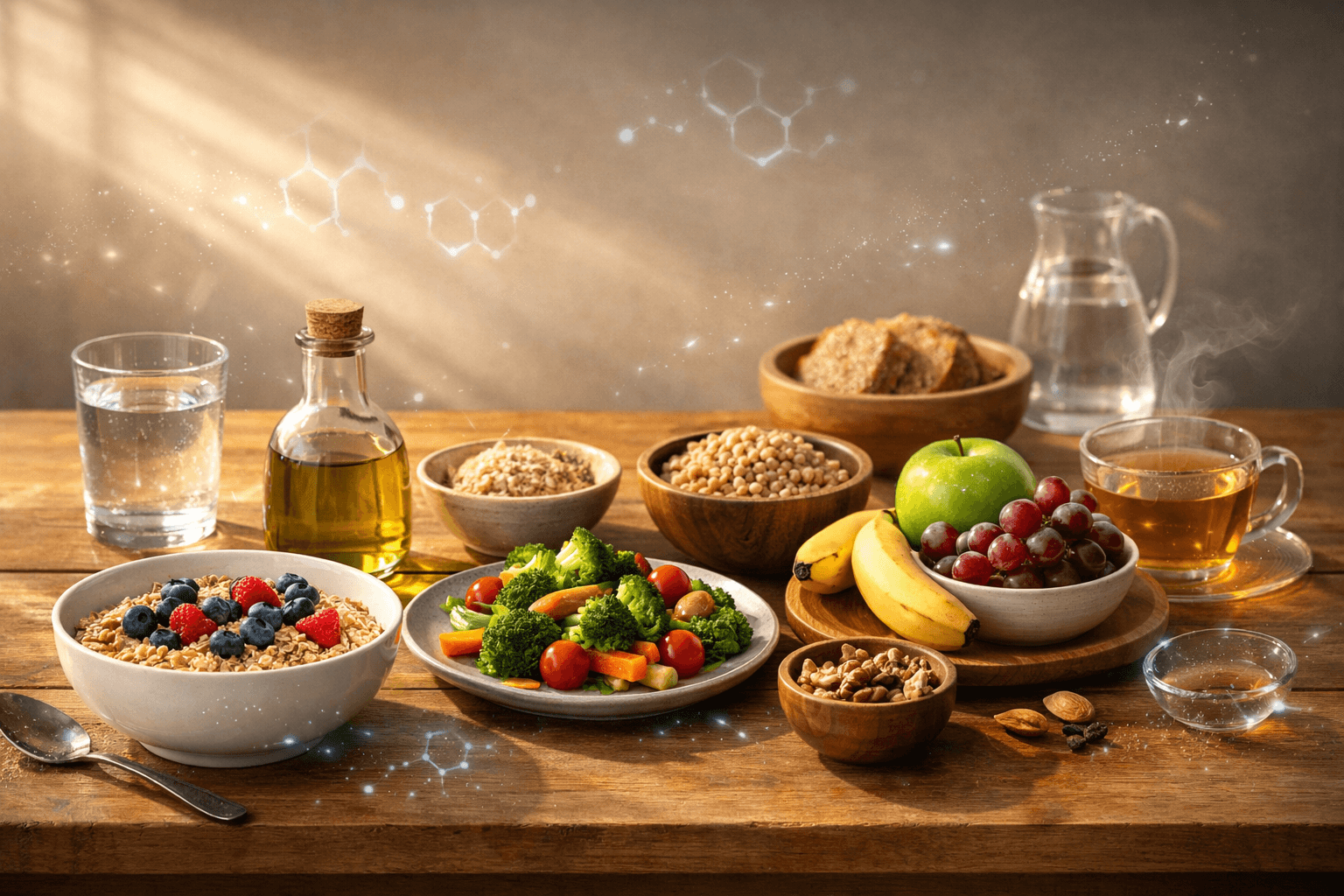
The longevity boost hiding in your everyday meals, no superfoods required.
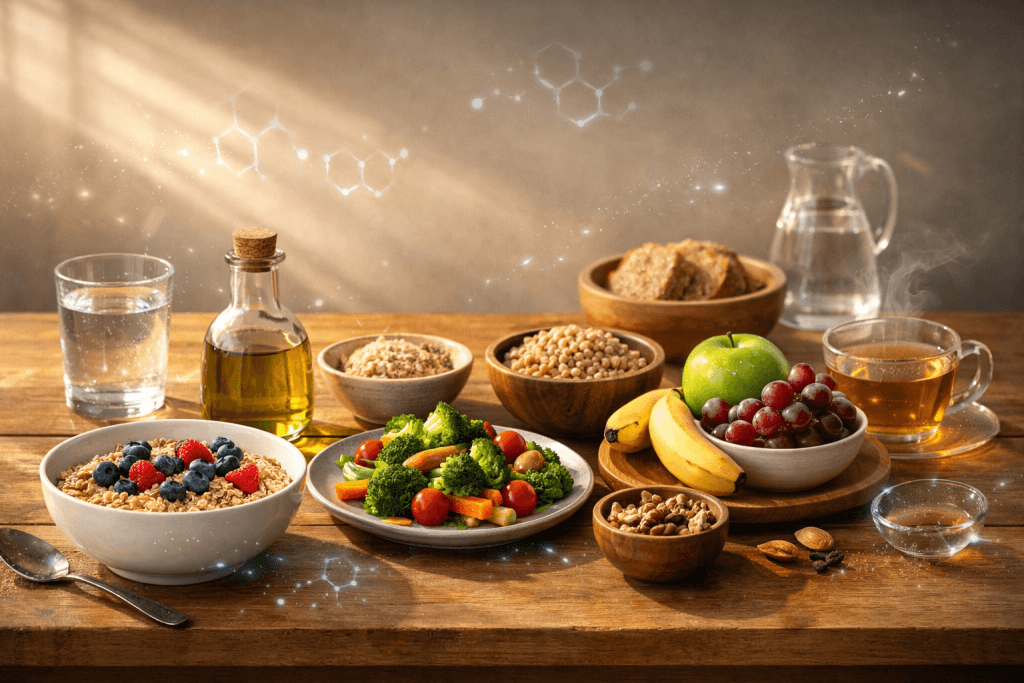
Living longer does not require exotic supplements, imported superfoods, or a higher grocery bill. Some of the most powerful longevity habits are practiced daily by people who eat simply, cook at home, and rarely think about “biohacking.” Decades of nutrition research and real-world data from long-living populations point to the same conclusion: how you eat matters far more than how much you spend.
Here are 7 science-backed food habits that can extend lifespan and healthspan without increasing your food budget.
Key Takeaways
- Eating less meat often beats eating “better” meat
- Beans may be the cheapest longevity food on Earth
- Meal timing matters as much as calories
- Ultra-processed foods quietly shorten healthspan
- Simple, repetitive meals are a hidden advantage
1. Eat More Plants Without Going Fully Vegetarian
You do not need to give up meat to gain longevity benefits. What matters is proportion, not labels.
Long-living populations tend to eat:
- Vegetables at nearly every meal
- Legumes several times per week
- Meat occasionally, often as a flavoring
Large cohort studies show that even partially replacing animal protein with plant protein lowers mortality risk.
Why it works: Plant foods are rich in fiber and polyphenols, which reduce chronic inflammation and improve insulin sensitivity. They also feed beneficial gut bacteria linked to lower disease risk.
💡 Budget win: Frozen and canned vegetables (low sodium) are nutritionally comparable to fresh and often cheaper.
2. Make Beans a Staple, Not a Side Dish
If longevity had a mascot, it would probably be a bean.
Beans are:
- Among the cheapest foods per calorie
- High in protein, fiber, and minerals
- Consistently linked to longer lifespan
In multiple observational studies, each additional daily serving of legumes is associated with reduced mortality.
Why it works: Beans stabilize blood sugar, lower LDL cholesterol, and promote a healthier gut microbiome. Their slow digestion also helps regulate appetite naturally.
💡 Cheapest options: Dry lentils, split peas, black beans, chickpeas. A bag can feed you for days.
3. Stop Eating When You’re 80 Percent Full
This habit comes from Okinawa, one of the world’s most famous longevity regions. It is called Hara Hachi Bu.
Instead of eating until stuffed, people stop when they feel comfortably satisfied.
Over a lifetime, this habit leads to:
- Lower calorie intake without dieting
- Less weight gain with age
- Reduced metabolic stress
Why it works: Chronic overeating activates aging-related pathways tied to insulin resistance and inflammation.
💡 Simple trick: Eat slower and pause halfway through meals. Fullness hormones take time to kick in.
4. Compress Your Eating Window (Without Extreme Fasting)
You do not need aggressive intermittent fasting to see benefits.
Simply:
- Delay breakfast slightly
- Eat dinner earlier
- Avoid late-night snacking
This naturally creates a 12 to 14 hour overnight fasting window, which research links to better metabolic health.
Why it works: Longer fasting periods allow the body to shift into repair mode, activating processes like autophagy.
💡 Side benefit: Fewer snacks usually means fewer impulse purchases.
5. Cook Most of Your Meals at Home
This is one of the most underrated longevity habits.
People who cook at home regularly tend to:
- Eat fewer ultra-processed foods
- Consume less sodium and sugar
- Maintain healthier body weight
Studies show home cooking is associated with lower mortality, even after adjusting for income and education.
Why it works: Ultra-processed foods disrupt appetite regulation, gut health, and blood sugar control.
💡 Longevity shortcut: Rotate 5 to 7 simple meals you can cook on autopilot.
6. Use Fats Strategically, Not Fearfully
Long-living populations are not low-fat. They are low in industrial fats.
Common patterns include:
- Olive oil as a primary fat
- Nuts and seeds in small amounts
- Minimal trans fats and deep-fried foods
Why it works: Healthy fats support heart health, reduce inflammation, and improve absorption of fat-soluble vitamins.
💡 Cost note: Olive oil is often cheaper per calorie than butter or processed sauces.
7. Eat the Same Simple Foods Again and Again
This habit surprises many people.
In longevity hotspots, people often eat:
- The same breakfast daily
- Very similar lunches
- Simple, repetitive dinners
Variety is not the goal. Consistency is.
Why it works: Repetition reduces decision fatigue, emotional eating, and reliance on convenience foods.
💡 Boring food is often protective food.
One More Habit That Ties It All Together: Eat With Intention
Long-living cultures rarely eat:
- While distracted
- While rushed
- While emotionally overwhelmed
Meals are slower and more deliberate.
Why it works: Mindful eating improves satiety signals and prevents chronic overeating without restriction.
💡 Even one screen-free meal per day can make a difference.
The Bottom Line
Longevity is not built on perfection or expensive nutrition trends. It is built on small, repeatable behaviors practiced consistently over decades.
You do not need:
- Superfoods
- Supplements
- Premium grocery stores
You need:
- Beans and vegetables
- Home-cooked meals
- Moderation
- Regular meal timing
- Simplicity
The surprising truth is that some of the cheapest food habits are also the most powerful for long-term health.
Sources
- Harvard T.H. Chan School of Public Health – Plant-based diets
https://nutritionsource.hsph.harvard.edu/ - BMJ – Ultra-processed foods and mortality
https://bmjgroup.com/30-year-us-study-links-ultra-processed-food-to-higher-risk-of-early-death/#:~:text=Higher%20consumption%20of%20most%20ultra,study%20in%20The%20BMJ%20today.