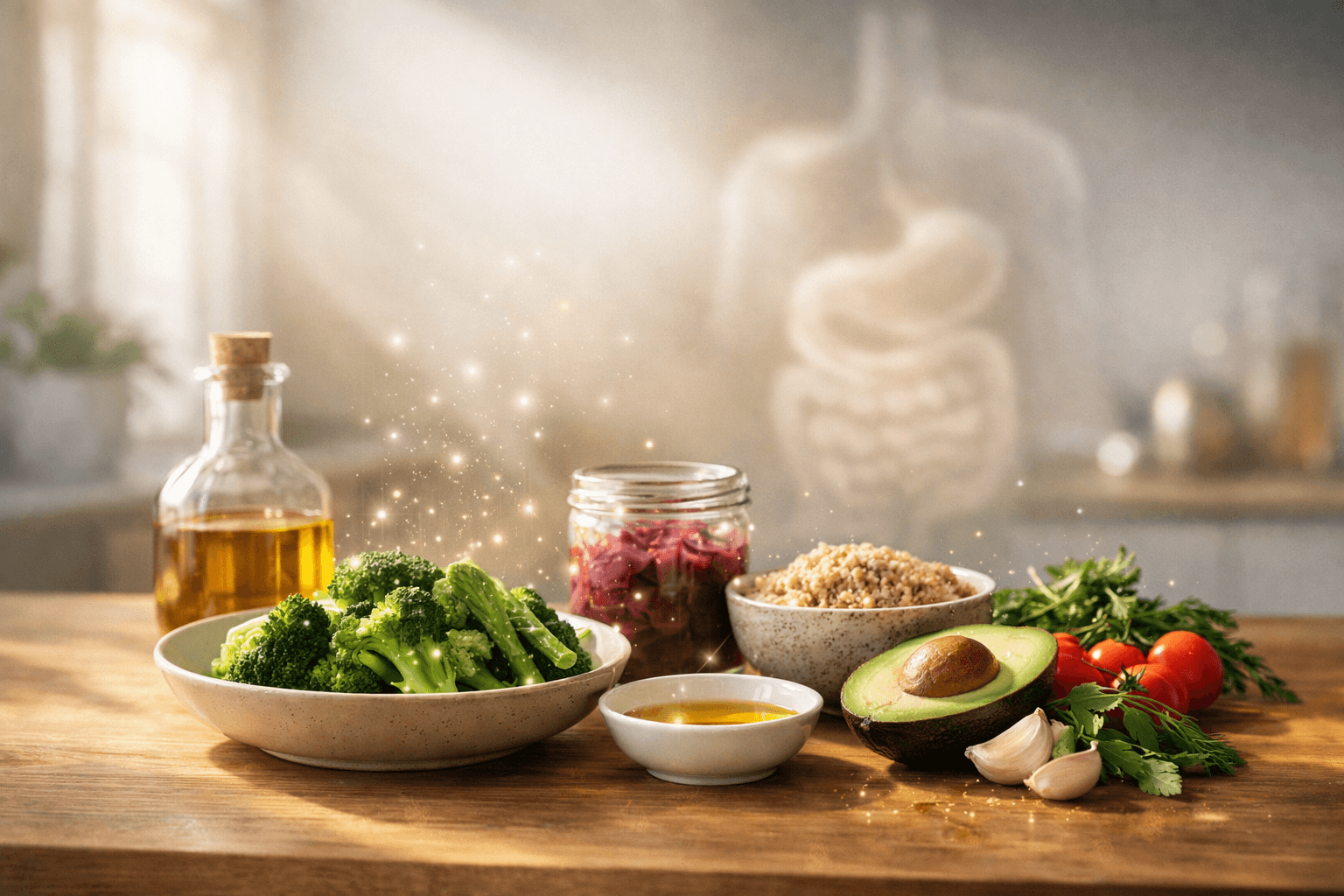
A science-backed biohacker guide to boosting absorption, bioavailability, and real benefits.
You can eat organic vegetables, whole grains, and “superfoods” every day and still miss a large share of their benefits. The reason is simple: nutrients on paper are not nutrients absorbed. Light, heat, microbes, cooling, and food pairing quietly determine what actually reaches your bloodstream.
This is where food biohacking shines. Not with pills or powders, but with small, evidence-based upgrades to everyday foods. Mushrooms making vitamin D in sunlight are the most famous example, but far from the only one.
Key takeaways for skimmers
- Food is biologically dynamic, not nutritionally fixed
- Bioavailability matters more than labels
- Light, fermentation, cooking, cooling, and pairing can multiply nutrient absorption
- Mushrooms are just one example of a broader nutritional principle
- These strategies enhance a good diet, they do not replace it
Foods that improve with light and air exposure
🍄 Mushrooms and vitamin D
Mushrooms contain ergosterol, a compound that converts into vitamin D₂ when exposed to UVB light, through a reaction similar to vitamin D synthesis in human skin.
Brief exposure to direct outdoor sunlight allows store-bought mushrooms to generate nutritionally meaningful vitamin D₂. Slicing mushrooms increases surface area and enhances the effect. Indoor sunlight through windows does almost nothing because UVB does not pass through glass.
For people with low vitamin D status, especially in winter or low-sun regions, UV-exposed mushrooms can contribute to circulating vitamin D levels. While vitamin D₃ remains more potent, vitamin D₂ from mushrooms is bioavailable and biologically active, making it particularly relevant for plant-based diets.
🫒 Olive oil and antioxidant preservation
Some foods benefit from light. Olive oil does not.
Extra virgin olive oil is rich in polyphenols, including hydroxytyrosol, which drive many of its cardiovascular and anti-inflammatory effects. These compounds degrade when exposed to light, heat, and oxygen.
Storing olive oil in dark glass, away from heat and sunlight, preserves its antioxidant profile. Clear bottles left on countertops quietly lose much of what makes olive oil protective, even if the taste remains acceptable.
Foods that improve with soaking, sprouting, and fermentation
🌱 Legumes, grains, and mineral absorption
Beans, lentils, oats, and whole grains contain phytic acid, an antinutrient that binds iron, zinc, and magnesium, reducing absorption.
Soaking, sprouting, or fermenting activates enzymes that break down phytic acid, allowing minerals to become available during digestion. This preparation step increases micronutrient uptake without changing the food itself.
Traditional cultures relied on these methods because they worked. Modern food processing removed them for convenience, not because they stopped being useful.
🥬 Cabbage transformed by fermentation
When cabbage ferments into sauerkraut or kimchi, lactic acid bacteria reshape its nutritional profile.
Live fermentation introduces beneficial microbes, improves digestibility, and increases vitamin K₂, a nutrient involved in calcium metabolism and cardiovascular health. Vitamin K₂ also works synergistically with vitamin D.
Pasteurized fermented foods lose many of these benefits because the microbes are no longer alive.
🥛 Milk improved through fermentation
Turning milk into yogurt or kefir reduces lactose content and introduces beneficial bacteria. This often makes fermented dairy easier to digest and better tolerated.
Kefir typically delivers a broader microbial diversity than yogurt and is one of the most efficient fermented foods for supporting gut health.
Foods that benefit from heat and cooking method
🍅 Tomatoes and lycopene bioavailability
Raw tomatoes contain lycopene, but cooking changes how the body accesses it.
Heat breaks down plant cell walls, and pairing tomatoes with fat dramatically improves absorption. Slow-cooked tomatoes with olive oil deliver far more usable lycopene than raw tomatoes.
This matters because lycopene is linked to cardiovascular health and oxidative stress regulation. It is a clear case where cooking increases nutritional value rather than diminishing it.
🥕 Carrots, spinach, and carotenoids
Carotenoids are fat-soluble compounds. Light cooking softens plant structures, and adding fat allows these compounds to cross the intestinal barrier more efficiently.
Lightly cooked carrots or spinach with olive oil often provide greater beta-carotene uptake than raw salads. Raw vegetables still matter, but cooking shifts the nutritional payoff instead of reducing it.
Foods that improve through pairing and synergy
🌶️ Turmeric and black pepper
Curcumin has strong biological activity but is poorly absorbed alone. Black pepper contains piperine, which slows curcumin breakdown in the gut and liver.
Traditional cuisines rarely separate these spices, and absorption research explains why the pairing is so effective.
🍋 Plant iron paired with vitamin C
Iron from plant foods exists in a form that is harder to absorb. Vitamin C chemically converts it into a more bioavailable state.
Adding citrus, bell peppers, or other vitamin C–rich foods to plant-based meals substantially improves iron uptake, which is especially important for vegetarian and vegan diets.
🍵 Green tea with citrus
Catechins in green tea degrade during digestion. Adding lemon or other citrus stabilizes these antioxidants, allowing more of them to be absorbed.
Foods that improve with cooling and time
❄️ Rice, potatoes, and resistant starch
When cooked starches cool, their structure changes through retrogradation, forming resistant starch.
Resistant starch behaves more like fiber than sugar. Cooled rice or potatoes produce a lower blood glucose response and feed beneficial gut bacteria. Reheating does not fully reverse this effect.
🌾 Oats and beta-glucans
Soaking oats overnight improves the functional properties of beta-glucans, fibers associated with cholesterol reduction and improved glucose control. In this case, time, not heat, does the work.
Practical limits worth understanding
These strategies improve nutrition, but they do not compensate for a poor overall diet. Individual biology, baseline nutrient status, and consistency all influence results. Some nutrients still require supplementation for certain populations, and cooking can reduce some vitamins while improving others.
Food biohacking is about net benefit, not perfection.
The deeper insight
🍄 The mushroom vitamin D effect is interesting, but it is not the main lesson.
The real takeaway is that nutrition is dynamic. Food labels describe what is present, not what is absorbed. Light, microbes, heat, time, and pairing quietly determine how much benefit reaches your bloodstream.
Before buying another supplement, it is worth asking a simpler question:
Are you extracting the full value from the food you already eat?
Sources
- NIH – Vitamin D forms and bioavailability
https://ods.od.nih.gov/factsheets/VitaminD-HealthProfessional - Food microstructure and processing affect nutrient bioavailability
https://onlinelibrary.wiley.com/doi/abs/10.1111/j.1750-3841.2007.00274.x