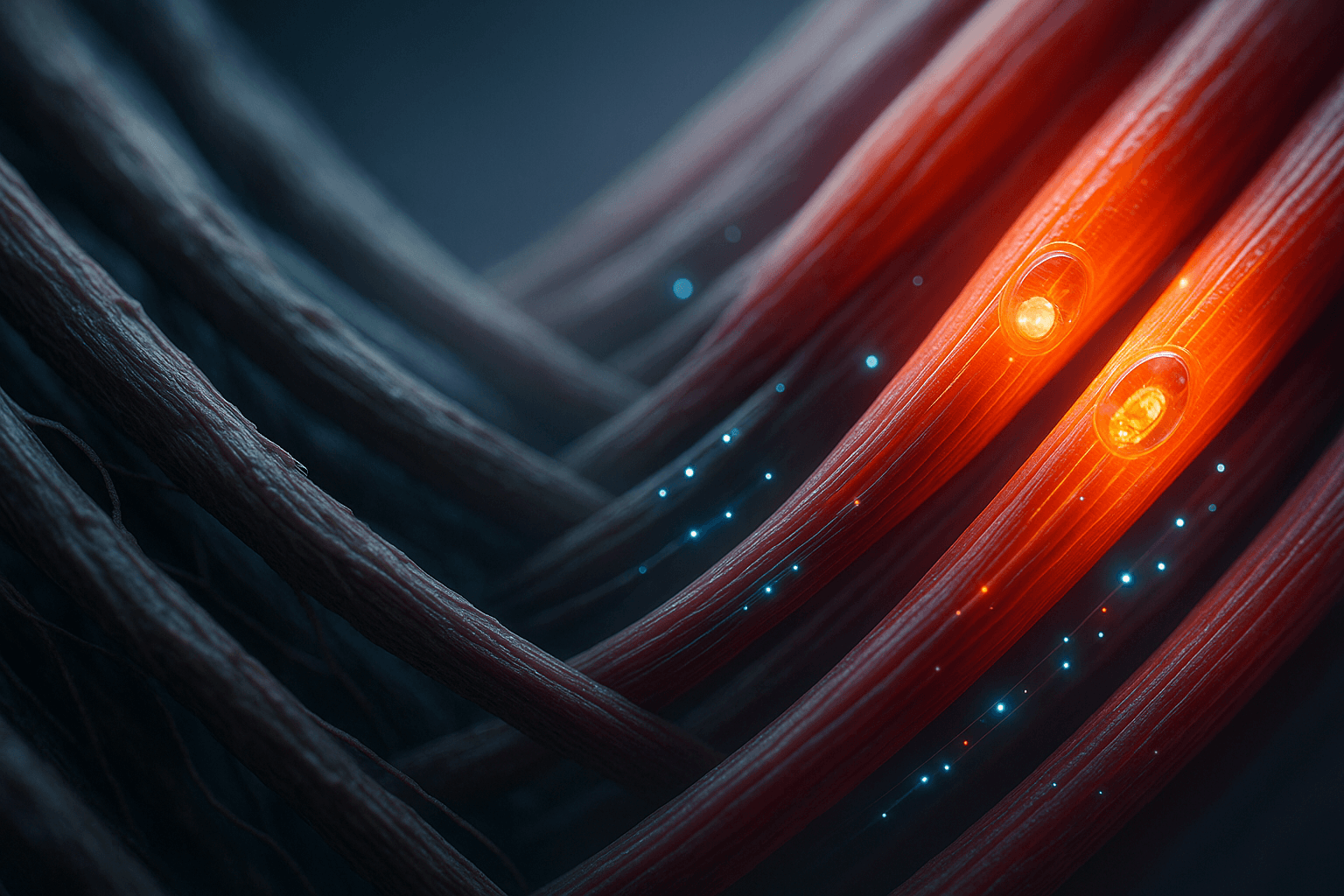
A tiny “cleanup system” inside your muscle cells could be the key to feeling younger, recovering faster, and keeping strength for life.
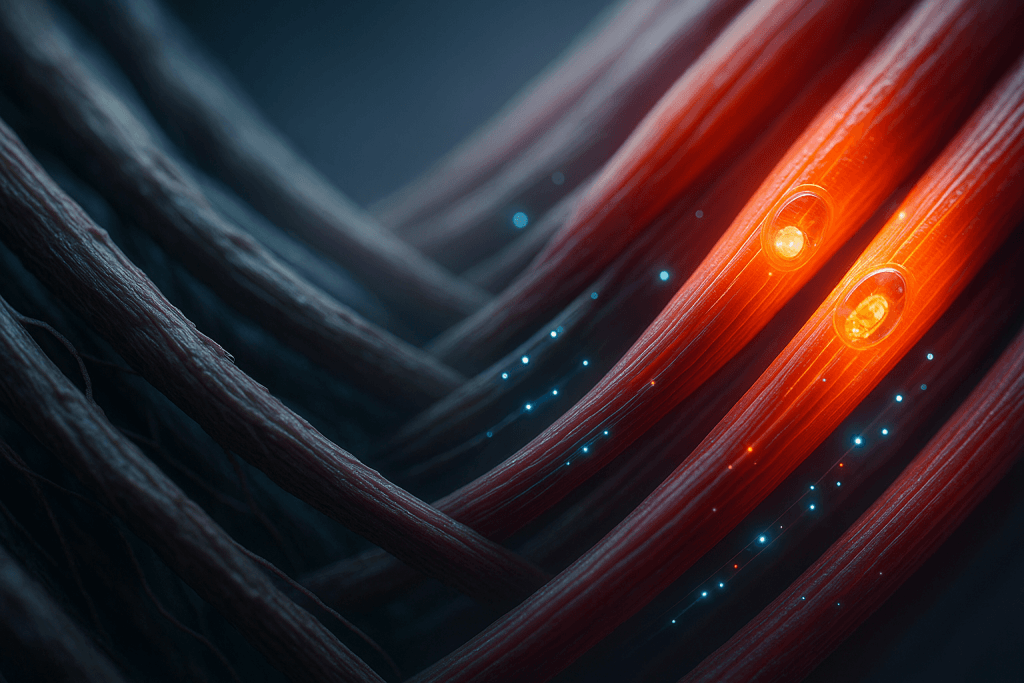
Most people think muscle aging is simple. You get older. You lose strength. Workouts feel heavier. Recovery slows. It seems normal.
But a new study shows something way more surprising. It reveals that muscle aging begins with a hidden cleanup system inside each cell. When this system slows, muscles start acting old long before you notice it.
And when scientists boosted this system in older animals, the muscles behaved younger again. That changes everything for longevity and strength.
Key Takeaways
- The main driver of muscle aging is a decline in cellular cleanup.
- When cleanup slows, energy and calcium become unstable inside muscle cells.
- Boosting this system made old muscles look and act younger.
- Human data shows the same decline from age 20 to 80.
- Supporting this cleanup system may slow muscle aging naturally.
The quiet system that keeps muscles young
Inside every muscle cell there is a small cleaning crew. It clears broken proteins before they cause trouble. When you are young, this crew works fast and smooth.
With age it slows down.
🧽This lets damaged proteins pile up. Energy becomes messy. Calcium moves into places it should not. Muscle fibers get smaller. Recovery feels heavier. Fatigue hits faster.
This is the real story of early muscle aging. And it begins before the first signs of weakness.
What happens when this system breaks
Scientists tested this by creating mice whose muscles lacked this cleanup pathway.
The results hit hard. Their muscles grew weak. They broke down easily. They struggled with stress like fasting. Calcium spiked in weird ways. Energy flow collapsed. The muscles looked old even when the mice were young.
⚠️The message is simple. When cleanup fails, age arrives early.
Turning the system back on made old muscles act younger
The team then boosted this cleanup system in older animals. What happened looked almost like a slow rewind.
Old muscles became larger and healthier. Energy output became more stable. Calcium balance improved. Signs of degeneration slowed down.
The muscles were not fully young. But they were clearly less old.
This shows that muscle aging is not a fixed path. Cells still respond when cleanup returns.
Why calcium and energy became the stars
The study found that cleanup failure affects two key systems first: Mitochondria slow down and calcium becomes chaotic.
When mitochondria fall behind, strength and stamina drop.
When calcium misfires, coordination and recovery suffer.
This explains why so many people say things like:
“My legs feel heavy for no reason.”
“I recover slower than before.”
“I feel strong but run out of steam.”
It is not only age. It is messy cell housekeeping.
Humans show the same pattern
Researchers checked muscle from adults aged 20 to 80. The same trend showed up again and again.
- Cleanup activity drops with age.
- Low cleanup matches low VO2 max.
- People with metabolic issues lose cleanup faster.
- Sarcopenia shows a big failure in cleanup.
- Slow walkers show weaker cleanup too. 🚶
It is basically universal.
What biohackers can do right now
There is no direct pill yet for this cleanup pathway.
But we know lifestyle habits that support cellular cleaning in general.
- Regular strength training
- Sauna or heat sessions
- Mild cold exposure
- Good sleep
- Low junk calories
- Lower inflammation
- Healthy mitochondria habits
These do not flip the switch completely. But they keep the cleanup environment strong.
Is lifting weight not enough?
Lifting is powerful. But this study shows that aging begins deeper. You can train well yet still lose internal order.
Many people hit a strength wall after 40 even when they stay active. The outside is fine. The inside cleanup is slowing.
The bottom line
Muscle aging is not just a slow drop in strength. It is a loss of inner cleanliness.
💪 When the cleanup system slows, everything else begins to break: Energy. Calcium. Recovery. Metabolism. Strength. Resilience.
The hopeful part is simple, this system can wake up again and old muscles can improve.
Sources
- Age-related decline of chaperone-mediated autophagy in skeletal muscle leads to progressive myopathy
https://www.nature.com/articles/s42255-025-01412-9