Methylene blue is the latest viral wellness trend, but doctors say the 150-year-old textile dye could be dangerous, especially if you take antidepressants.
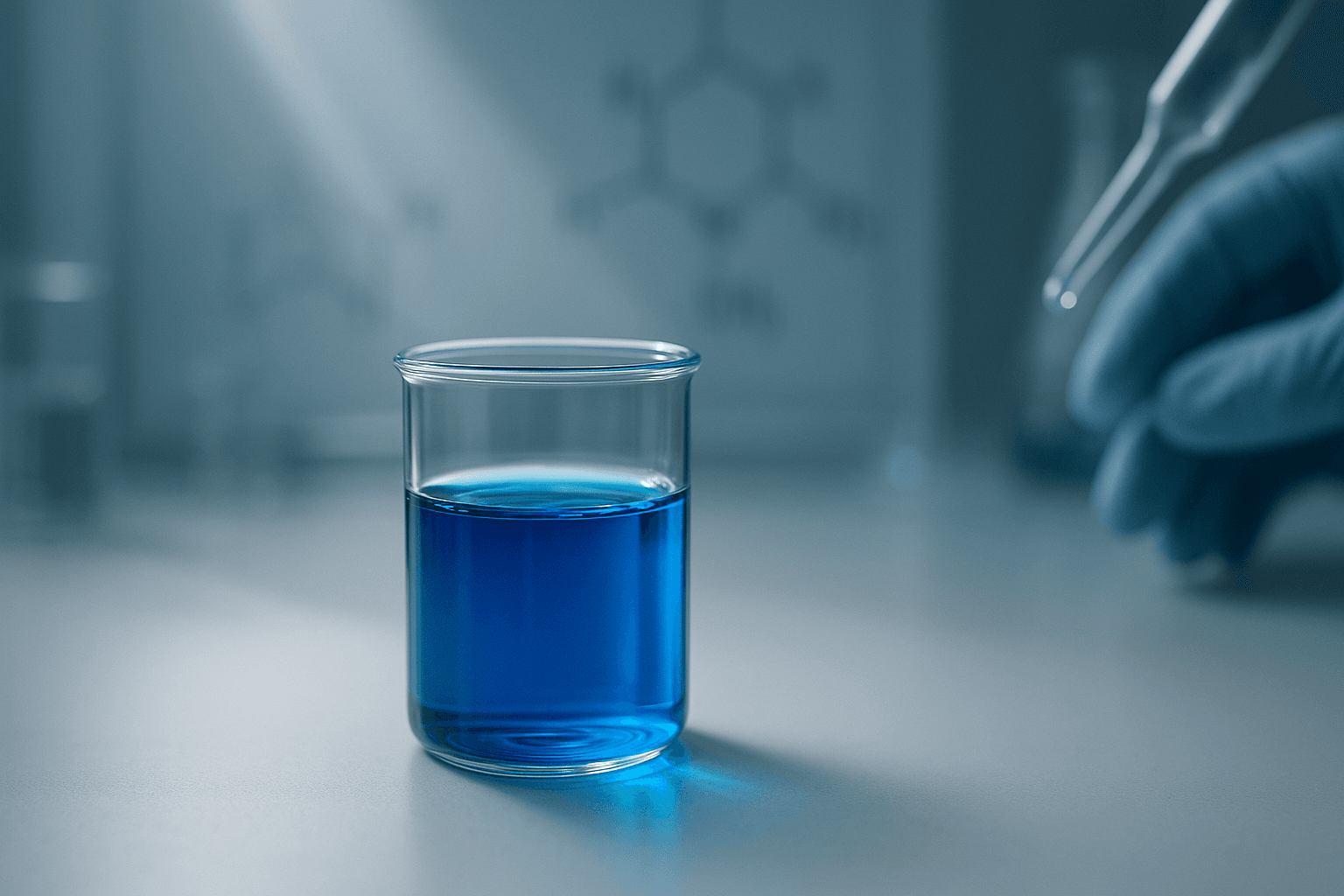
Your TikTok feed probably showed you someone with a bright blue tongue this week. Maybe RFK Jr. mixing cobalt liquid into water. Maybe a biohacker claiming sharper focus and boundless energy from a few drops of what looks like food coloring.
Methylene blue is having a moment. Search interest has spiked 300% over five years. Influencers are calling it a mitochondrial enhancer, a brain booster, an anti-aging miracle. And yesterday, NPR published a warning that scientists want everyone to see before they order it.
The substance biohackers are drinking? It started as a textile dye in the 1870s. Now it's an FDA-approved medication for a rare blood disorder. And the unregulated supplements flooding the market might be neither safe nor effective.
Key Takeaways
- Methylene blue is an FDA-approved drug for a rare blood disorder, not a supplement, though it’s being sold as one online
- Lab studies show promise for mitochondrial function, but human research remains extremely limited with small trials only
- Serious risks exist, especially serotonin toxicity that can cause seizures or death in people taking common antidepressants like Zoloft or Lexapro
- The supplement market is unregulated, meaning you don’t actually know what’s in the bottle you’re buying
- Scientists warn the risks outweigh benefits for healthy people seeking cognitive enhancement
The Viral Blue Tongue Trend
💙 Earlier this year, a video of Robert F. Kennedy Jr. went viral. America’s top health official was filmed using an eyedropper to mix a brilliant blue liquid into water. He never confirmed what he was taking, but the color and delivery method matched methylene blue products sold by online retailers.
The speculation exploded. If RFK Jr. was taking it, biohackers wanted in.
Suddenly, blue tongues were everywhere. Wellness influencers posted before-and-after videos. Longevity enthusiasts shared their stacks. The comment sections filled with questions about dosing, sourcing, and whether it really works.
The claims flooding social media:
- Better energy and stamina
- Sharper thinking and focus
- Slowed aging process
- Improved mood and motivation
- Cured jetlag
A miracle molecule hiding in plain sight for 150 years, finally discovered by people willing to optimize harder than everyone else. But scientists who actually study methylene blue have a very different take.
What Methylene Blue Actually Is
🧪 Methylene blue has been around since the 1870s as a textile dye. Over time, doctors found medical uses for it. It became an antimalarial treatment and an antidote for cyanide poisoning.
Today, it’s an FDA-approved medication for methemoglobinemia, a rare blood disorder where your blood can’t carry oxygen properly. It’s a prescription drug. Not a supplement.
“The FDA lists methylene blue as a generic drug requiring a prescription. Yet somehow, it’s widely available online without one.”
The biohacker version? That’s where things get murky. Online retailers sell it as a liquid supplement, usually in small dropper bottles. The products often don’t appear in the federal registry of dietary supplement labels. Many aren’t explicitly identified as supplements at all.
When NPR asked the FDA how this is possible, they didn't respond. Welcome to the Wild West of wellness products.
What the Science Actually Shows
🔬 The biohacker claims aren’t pulled from thin air. Lab studies and animal research do show interesting effects. Dr. Lorne Hofseth, who studies dyes’ effects on cancer and inflammation at the University of South Carolina, explains that methylene blue helps cells make energy more efficiently.
What animal studies found:
- Improved brain energy use in rodents
- Reduced inflammation markers
- Protection against neurological damage
- Enhanced mitochondrial function
There have been several small human trials showing antidepressant or cognitive benefits from pure pharmaceutical-grade methylene blue. But Hofseth is clear: these findings remain preliminary.
“You’re wasting your money.”
Dr. Lorne Hofseth, University of South Carolina
The gap between promising lab results and proven human benefits is massive. Animal studies don't translate directly to humans. Small trials in select populations don't prove it works for healthy people seeking an edge.
The Risks Scientists Are Warning About
⚠️ Here’s what makes yesterday’s NPR article so important: methylene blue can cause serotonin toxicity, a serious drug reaction that can kill you.
Who’s at highest risk:
- Anyone taking SSRIs (Zoloft, Lexapro, Prozac)
- People on other antidepressants
- Those with G6PD deficiency (affects millions worldwide)
- Anyone buying unregulated online products
Serotonin syndrome symptoms include:
- Elevated blood pressure
- Severe diarrhea
- Muscle rigidity
- Seizures
- Potential death
Dr. Nicole Brandt, who studies geriatric pharmacotherapy at the University of Maryland School of Pharmacy, points out another problem: you don’t know what you’re actually getting.
“We really don’t have good oversight, or any oversight to nutritional supplements and what’s in them.”
Dr. Nicole Brandt, University of Maryland
The Supplement Loophole Problem
📦 Unlike prescription drugs, supplements don’t need FDA approval for safety and efficacy before hitting the market. Manufacturers are supposed to follow labeling rules and are subject to inspection. The FDA monitors safety concerns after products are already being sold.
But federal regulators have limited resources and can’t catch every bad actor.
“The internet is a big place. There are a lot of products for sale that are not safe.”
Dr. Joshua Sharfstein, Johns Hopkins Bloomberg School of Public Health
What you’re trusting when you buy online:
- The manufacturer actually included methylene blue
- The dose matches what’s on the label
- No contaminants were added
- Storage and handling didn’t degrade it
- The product is what it claims to be
That’s a lot of trust for a product that bypasses normal drug safety protocols.
Why People Think It Works
🧠 So why do influencers and biohackers swear by it? Why do they post glowing reviews and attribute their productivity to blue drops in water?
“Cognition is subjective. We have good and bad days if we sleep well, if we eat well.”
Dr. Nicole Brandt
This is the placebo problem that haunts all wellness trends:
- You start taking something new and get excited about it
- You paid money for it, so you want it to work
- You’re more motivated to optimize other areas
- You might sleep better because you’re being more intentional
- You attribute good days to the supplement
The blue dye gives you something to credit. The bad days? Those were probably going to happen anyway.
What Might Actually Be Promising
There is legitimate research happening. Hofseth points to work in the UK on a modified form of methylene blue for Alzheimer’s disease treatment. This isn’t the same stuff sold as supplements.
The difference:
- Pharmaceutical-grade purity
- Precisely controlled dosing
- Proper clinical trials
- Medical supervision
- FDA oversight
That's the path forward for methylene blue as medicine: rigorous research, clinical trials, FDA approval, medical supervision. Not ordering mysterious blue liquid from Instagram ads and hoping for the best.
The Bottom Line
If you’re taking antidepressants, methylene blue could be dangerous. If you have G6PD deficiency, it could be dangerous. If you’re buying it from unregulated online retailers, you don’t know what you’re actually taking.
The current evidence doesn’t support healthy people taking methylene blue for cognitive enhancement or longevity. The human studies are too small and preliminary. The risks are real. The regulation is absent.
If you’re experiencing brain fog, fatigue, or cognitive issues, talk to a doctor. There are evidence-based interventions that actually work. If you’re just chasing an edge, there are safer ways to optimize.
And if you still decide to try it despite the warnings? Know that your teeth, tongue, and urine will turn bright blue. It’s not subtle. It’s a daily reminder that you’re experimenting on yourself with a textile dye from the 1870s.
The blue tongue might get you likes on TikTok. But scientists say it's not worth the risk.
Sources
- Methylene Blue Wellness Claims and Risks
https://www.npr.org/2025/12/15/nx-s1-5634680/methylene-blue-supplement-safety - Methylene Blue Increases Active Mitochondria and Cellular Survival Through Modulation of miR16–UPR Signaling Axis
https://www.mdpi.com/2673-5261/6/3/16 - Methylene Blue Protects Spatial Working Memory after Traumatic Brain Injury in Mice by Affecting Mitochondrial Quality Control System
https://pubmed.ncbi.nlm.nih.gov/40879922/