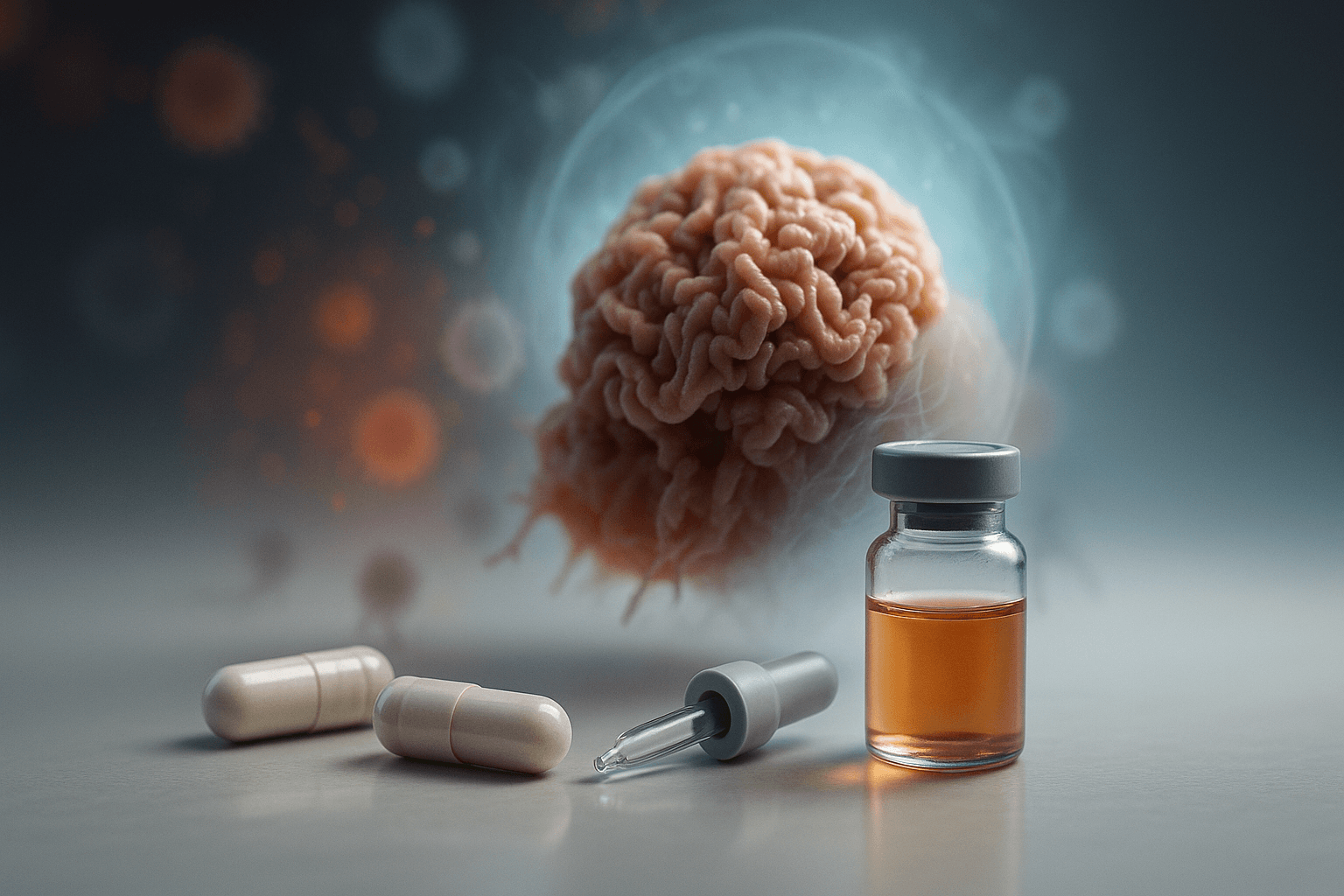
A small human study suggests a cheap, non-toxic nutraceutical mix may calm glioblastoma by reducing inflammation and immune evasion, not by killing cells.
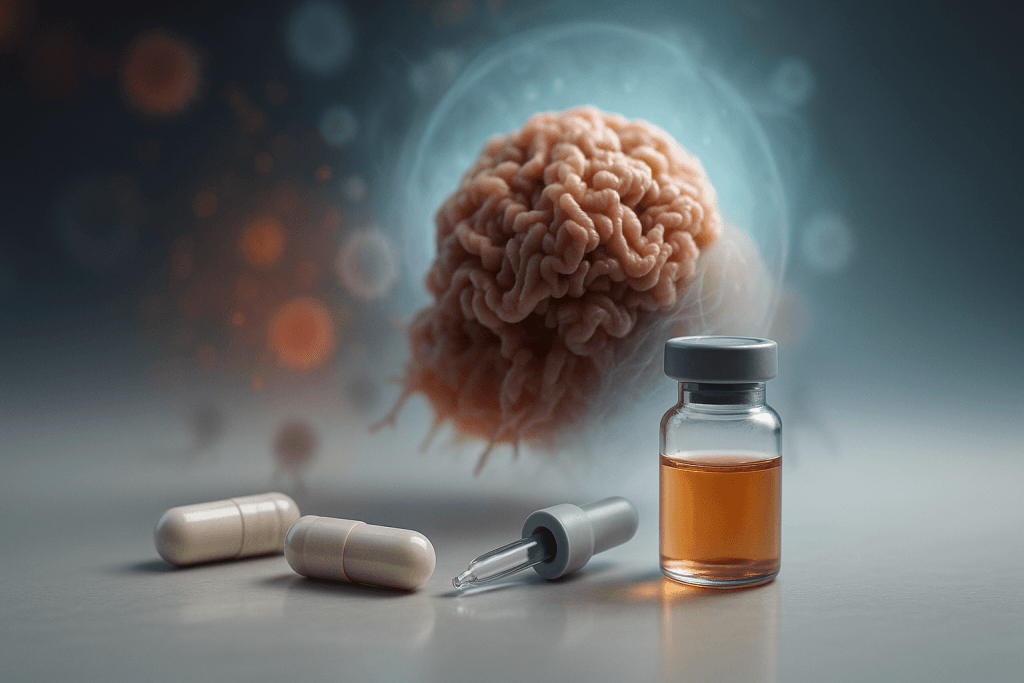
Glioblastoma is one of the most aggressive cancers known. Even with surgery, chemotherapy, and radiation, median survival is just 15 months. But a new study suggests something unexpected: a simple supplement combination may make these tumors less aggressive, without side effects, by helping them heal rather than destroying them.
💊 In a pilot trial published in BJC Reports, researchers gave glioblastoma patients a low-dose mix of resveratrol and copper for less than two weeks before surgery. The result was a dramatic shift in tumor biology, touching nearly every hallmark of cancer.
Key Takeaways
- Tumor growth markers dropped by nearly one-third after just days of supplementation
- Cancer hallmarks fell by 57% in treated tumors
- Immune checkpoint proteins dropped by 41%, without toxic drugs
- No side effects reported, even in fragile brain cancer patients
A Radical Idea: Heal the Tumor Instead of Attacking It
Most cancer therapies are built on a single idea: kill cancer cells. Chemotherapy poisons them. Radiation shatters their DNA. Immunotherapy unleashes immune attacks.
But Professor Indraneel Mittra, a surgical oncologist at Tata Memorial Centre in Mumbai, believes this approach may miss a deeper driver of cancer progression.
He builds on a decades-old observation by pathologist Harold Dvorak, who famously described cancer as “a wound that does not heal.” Chronic wounds and tumors share inflammation, immune dysfunction, and uncontrolled cell growth.
What if cancer worsens not just because cells grow, but because the tissue never resolves the damage?
Testing the Idea in Glioblastoma Patients
The study enrolled 10 patients with glioblastoma who took a tablet containing resveratrol and copper four times a day for an average of 11.6 days before surgery. Another 10 matched patients served as controls.
When surgeons removed the tumors, researchers compared them using microscopy, immune staining, and gene expression analysis.
The differences were striking.
- Ki-67, a marker of rapid cell division, was ~33% lower
- Cells expressing nine major cancer hallmarks were reduced by 57%
- Six immune checkpoint proteins, which help tumors evade immunity, dropped 41%
- Stem-cell–related markers, linked to relapse and resistance, fell 56%
And importantly, patients experienced no adverse effects.
The Hidden Culprit: Cell-Free DNA That Fuels Cancer
So what changed inside the tumors?
The researchers point to cell-free chromatin particles (cfChPs). These are fragments of DNA released when cancer cells die chaotically. Instead of helping, these fragments inflame nearby cancer cells, making them more aggressive and therapy-resistant.
Earlier work from the same group showed that resveratrol combined with copper generates reactive oxygen species that neutralize these DNA fragments.
In this study, cfChPs were abundant in untreated tumors but almost completely absent in tumors exposed to the supplement mix.
“The cell-free chromatin particles released by dying cancer cells inflame surviving cells and worsen the disease,” Mittra explains.
“If you eliminate them, the cancer is subdued.”
This shifts cell death toward apoptosis, a clean, controlled process that does not spill inflammatory DNA into surrounding tissue.
Immune Checkpoints Without the Toxic Price Tag
🛡️One of the most surprising findings was the drop in immune checkpoint proteins.
Checkpoint inhibitors are among the most powerful cancer drugs available today, but they are also extraordinarily expensive and can cause severe autoimmune side effects.
The resveratrol–copper combination reduced multiple checkpoints at once, without immune toxicity and at a fraction of the cost.
This does not replace immunotherapy, but it raises an intriguing possibility: can we gently reprogram the tumor environment instead of overpowering it?
A Paradigm Shift, With Important Caveats
🔍 This was a small study, and it did not track long-term survival. No one is claiming glioblastoma is cured.
But the biological signal was strong, consistent across markers, and aligned with a coherent mechanism.
“We have been trying to kill cancer cells for 2,500 years,” says Mittra.
“Maybe it is time to work toward healing tumors instead of annihilating them.”
If confirmed in larger trials, this approach could open the door to low-cost, accessible adjunct therapies, especially in settings where advanced cancer drugs are out of reach.
What This Means Right Now
This study does not suggest patients should self-treat with supplements. Dose, timing, and context matter, especially in cancer.
But it does suggest something deeper: cancer progression may be driven as much by unresolved damage as by uncontrolled growth.
And sometimes, calming the fire works better than throwing more bombs.
Sources
- Attenuation of malignant phenotype of glioblastoma following a short course of the pro-oxidant combination of Resveratrol and Copper
https://www.nature.com/articles/s44276-025-00177-8