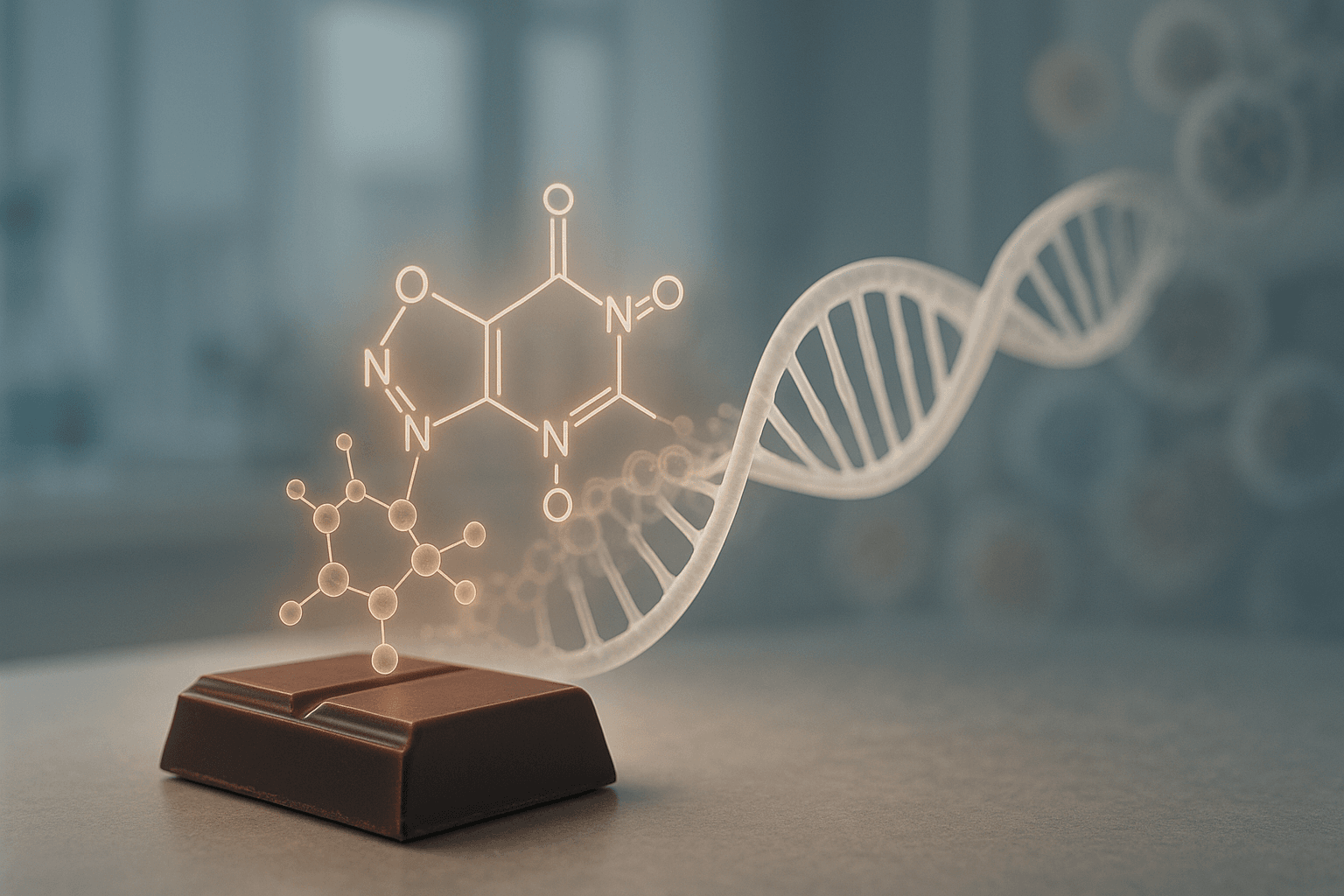
A large epigenetics study finds higher blood levels of theobromine are tied to a younger biological age, raising new questions about food and longevity.
Scientists have spotted an unexpected marker of slower aging hiding in dark chocolate. In a large European study, people with higher blood levels of theobromine, a natural cocoa compound, appeared biologically younger than their actual age. The finding does not mean eating more chocolate will slow aging. But it does suggest everyday foods may leave measurable fingerprints on how fast our bodies age.
Key Takeaways
- Higher theobromine levels were linked to slower epigenetic aging
- The effect showed up across two large European cohorts
- Other cocoa and coffee compounds did not show the same link
- Researchers stress this is association, not proof of cause
- The finding opens new doors in diet and aging research
What “Biological Age” Really Measures
🧬 Biological age reflects how well the body is functioning, not how many birthdays someone has had. It is often estimated using DNA methylation, small chemical tags on DNA that change in predictable ways as we age.
In this study, scientists analyzed blood samples from 1,669 adults across two cohorts, TwinsUK and KORA. They compared biological aging markers with hundreds of circulating dietary metabolites.
People with higher theobromine levels consistently showed a younger biological age than expected.
Why Theobromine Stood Out
🍫 Theobromine is a natural alkaloid found mainly in cocoa. It is chemically related to caffeine but acts differently in the body.
When researchers examined other cocoa and coffee-related metabolites, only theobromine showed this specific association with slower aging.
To confirm the signal, the team used two independent aging measures:
- Epigenetic clocks, which estimate the pace of aging
- Telomere length, protective DNA caps that shorten over time
Both pointed in the same direction.
How Plant Compounds May Shape Aging
Many plant molecules influence gene regulation without changing DNA itself. These effects happen through the epigenome, which controls how genes are turned on and off.
Theobromine has previously been linked to cardiovascular benefits in humans, though it is best known for being toxic to dogs. Until now, its role in aging biology had received little attention.
“Our study finds links between a key component of dark chocolate and staying younger for longer,” said Professor Jordana Bell, senior author and Professor of Epigenomics at King’s College London. “We are not saying people should eat more dark chocolate.”
Why This Is Not a Chocolate Prescription
⚠️ The researchers are careful to stress limits. This was an observational study, meaning it cannot prove theobromine causes slower aging.
Chocolate also contains sugar, fat, and calories. Simply eating more of it is unlikely to be a health shortcut.
“This is a very exciting finding,” said lead author Dr. Ramy Saad, “but the key questions are what is driving this association and how dietary metabolites interact with the epigenome.”
Future studies will test whether theobromine works alone or alongside other cocoa compounds like polyphenols, already known for metabolic benefits.
Why This Matters Now
Aging research is shifting from single nutrients to metabolic fingerprints that reflect long-term dietary patterns. This study highlights how population-level data can uncover subtle biological signals missed in smaller trials.
🧪 Theobromine may not be a longevity pill. But it could help scientists map how food, genes, and aging intersect at the molecular level.
Sources
- Theobromine is associated with slower epigenetic ageing
https://www.sciencedaily.com/releases/2025/12/251212022249.htm